

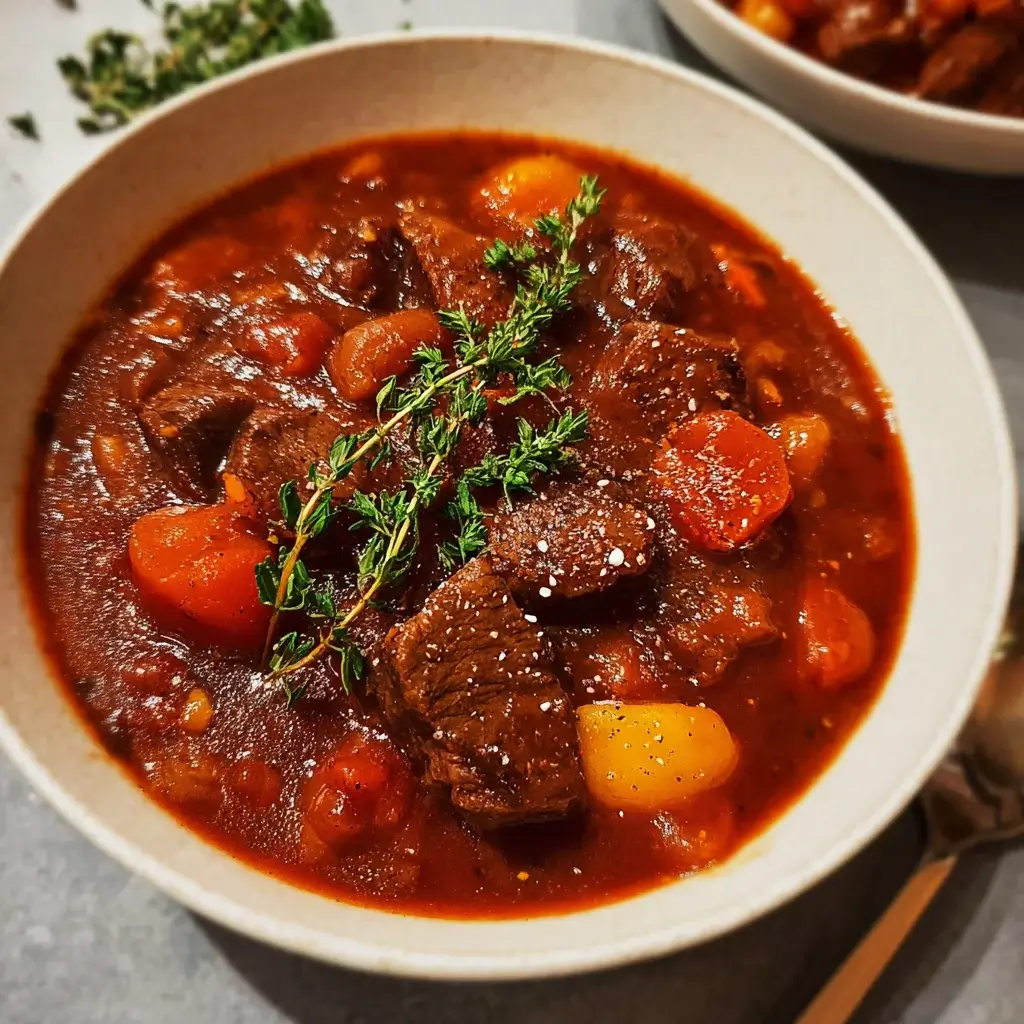
There are some meals that are more than just sustenance; they are a tradition, a scent that defines a season, a culinary anchor in the memories of a family. For my family, this Beef Tomato Stew is that meal. It’s the official dish that signals the true arrival of autumn, the one my kids request the moment the first cool breeze blows through the last days of summer. I can still trace its origins back to my grandmother’s kitchen, a place that always smelled of simmering onions and herbs. Her version was a marvel of simplicity and flavor, a testament to her belief that a few good ingredients, a heavy pot, and a bit of patience could create magic. Over the years, I’ve taken her foundational recipe and made it my own, deepening the flavors and perfecting the method. I learned that the secret wasn’t just in the tender, melt-in-your-mouth beef, but in the trifecta of tomato—rich paste for depth, crushed tomatoes for a velvety body, and diced tomatoes for a bright, fresh burst. The first time I served my perfected version, the reaction was pure, silent satisfaction. The kind of quiet that falls over a dinner table when the food is so good, no one wants to stop eating long enough to talk. It’s a hug in a bowl, a rich, savory, and deeply comforting stew that tastes of home, patience, and a whole lot of love.
The Ultimate Beef Tomato Stew Recipe
This recipe is the culmination of years of tweaking and tasting, designed to produce the most flavorful, rich, and satisfying beef stew you’ve ever had. It’s a classic comfort food that balances the deep, savory flavor of slow-cooked beef with the bright, vibrant character of a rich tomato base. This isn’t a quick weeknight meal; it’s a weekend project, a labor of love that rewards you with a dish that is truly spectacular and only gets better the next day.
The Complete Cast of Ingredients
The secret to a truly great stew lies in using quality ingredients and building layers of flavor from the ground up. Here’s everything you will need.
For the Beef and the Sear:
- 3 lbs boneless beef chuck roast, cut into 1.5-inch cubes
- ⅓ cup all-purpose flour
- 1.5 tsp coarse salt (kosher or sea salt)
- 1 tsp freshly ground black pepper
- 3 tbsp olive oil, divided
For the Stew Base and Aromatics:
- 2 large yellow onions, chopped
- 4 medium carrots, peeled and cut into 1-inch thick rounds
- 3 celery stalks, cut into 1-inch pieces
- 8-10 cloves garlic, minced
- 2 tbsp tomato paste
- ½ cup dry red wine (like Cabernet Sauvignon or Merlot) or ½ cup beef broth
- 1 (28 oz) can crushed tomatoes
- 1 (15 oz) can petite diced tomatoes, undrained
- 4 cups low-sodium beef broth
- 2 tbsp Worcestershire sauce
- 1 tbsp brown sugar (optional, to balance acidity)
- 2 tsp dried oregano
- 1 tsp dried thyme
- 2 bay leaves
- 1 cup frozen peas (optional, added at the end)
- Fresh parsley, chopped, for garnish
Ingredient Deep Dive: Understanding the Key Players
In a dish that relies on slow-cooked alchemy, every ingredient has a purpose. Understanding their roles is the key to mastering the recipe.
- The Best Cut of Beef for Stew:
- The Champion: Chuck Roast. There is no better cut for stewing than a boneless beef chuck roast. It comes from the shoulder, a hard-working muscle that is riddled with fat and tough connective tissue (collagen). This might sound unappetizing, but over a long, slow, moist cooking process, this collagen breaks down into rich, unctuous gelatin. This gelatin is what gives the stew its luxurious, full-bodied texture and makes the beef unbelievably tender and moist.
- What to Avoid: Steer clear of lean, expensive cuts like sirloin, filet mignon, or even round roast. They lack the necessary fat and collagen and will become dry, tough, and stringy after a long cook. The toughness of chuck is its greatest strength in this application.
- The Tomato Trio: The Heart of the Stew
- Tomato Paste: This is concentrated tomato flavor and a key source of umami. “Toasting” the tomato paste in the pot before adding liquids cooks off any raw, tinny flavor and deepens its savory, rich character.
- Crushed Tomatoes: This provides the main body and velvety texture of your stew’s sauce. It creates a thick, rich base that is smoother than diced tomatoes alone.
- Petite Diced Tomatoes: These add a brighter, fresher tomato flavor and a wonderful texture to the stew, leaving little bursts of tomato throughout the finished dish.
- The Liquid Gold: Wine and Broth
- Dry Red Wine: This is used to “deglaze” the pan. The acid and alcohol in the wine are incredibly effective at dissolving the deeply flavorful browned bits (the fond) stuck to the bottom of the pot after searing the beef. It adds a layer of complexity and depth that broth alone cannot replicate. A decent quality wine that you would drink is best—if it’s not good enough to drink, it’s not good enough to cook with.
- Non-Alcoholic Substitute: If you prefer not to use wine, you can substitute it with an equal amount of beef broth, adding 1 tablespoon of balsamic or red wine vinegar to provide a touch of acidity.
- Beef Broth: Use a good quality, low-sodium beef broth. This allows you to control the final saltiness of the stew yourself.
Step-by-Step Instructions for Stew Mastery
This is a journey of flavor-building. Each step is crucial for achieving that deep, complex, slow-simmered taste.
Part 1: The Sear – Building the Foundation of Flavor
- Prepare the Beef: In a large bowl, whisk together the ⅓ cup of all-purpose flour, 1.5 teaspoons of coarse salt, and 1 teaspoon of black pepper. Pat the beef cubes completely dry with paper towels (this is essential for getting a good brown crust). Add the beef to the flour mixture and toss until every piece is lightly and evenly coated.
- Heat the Pot: In a large, heavy-bottomed Dutch oven or stockpot, heat 2 tablespoons of the olive oil over medium-high heat. The pot should be hot and the oil shimmering before you add the beef.
- Sear the Beef in Batches: Carefully place half of the flour-dusted beef cubes into the hot pot in a single layer. Do not overcrowd the pan. Overcrowding will steam the meat instead of searing it. Cook the beef for 3-4 minutes per side, without moving it, until a deep, dark brown crust has formed. Transfer the seared beef to a separate plate and set aside. Repeat the process with the remaining beef, adding the last tablespoon of olive oil to the pot.
Part 2: The Sauté and Deglaze – Creating the Sauce Base
- Sauté the Vegetables: Reduce the heat to medium. Add the chopped onions, carrots, and celery to the same pot (do not clean it!). Sauté the vegetables for 8-10 minutes, stirring occasionally with a wooden spoon, until the onions have softened and become translucent.
- Add the Aromatics: Add the minced garlic and the 2 tablespoons of tomato paste to the pot. Cook for another 2 minutes, stirring constantly, until the garlic is fragrant and the tomato paste has darkened slightly in color. This toasts the paste and deepens its flavor.
- Deglaze the Pot: Pour the ½ cup of red wine (or broth) into the hot pot. As the liquid sizzles, use your wooden spoon to scrape vigorously at the bottom of the pot, releasing all of the flavorful browned bits (the fond) that are stuck there. This is where a massive amount of flavor lives. Let the liquid simmer until it has reduced by about half.
Part 3: The Long, Slow Simmer – Where the Magic Happens
- Combine Everything: Return the seared beef and any juices that have accumulated on the plate back to the pot. Add the crushed tomatoes, diced tomatoes, 4 cups of beef broth, Worcestershire sauce, optional brown sugar, dried oregano, dried thyme, and the bay leaves.
- Bring to a Simmer: Stir everything together well and bring the stew to a gentle simmer over medium-high heat.
- Cook Low and Slow: Once the stew is simmering, reduce the heat to the lowest possible setting on your stovetop. Cover the pot tightly and let it cook for 2.5 to 3.5 hours. Stir it gently every 45 minutes or so to ensure nothing is sticking to the bottom. The stew is done when the beef is completely tender and can be easily shredded with a fork. If it’s still firm, it just needs more time.
- Add the Peas (Optional): If you are using frozen peas, stir them in during the last 5 minutes of cooking. They just need to heat through.
- Final Touches: Remove the pot from the heat. Fish out and discard the 2 bay leaves. Taste the stew and adjust the seasoning with additional salt and pepper as needed.
Nutrition Facts
- Servings: 8-10 hearty servings
- Calories per serving: Approximately 550-650 kcal
Disclaimer: This is an estimate based on the ingredients listed. The final nutritional value will vary based on the specific cut of beef, the amount of oil used, and final serving size.
Preparation Time
- Prep Time: 25 minutes
- Cook Time: 3 – 4 hours
- Total Time: Approximately 3.5 – 4.5 hours
How to Serve Your Beef Tomato Stew
This rich and hearty stew is a complete meal in a bowl, but serving it with the right accompaniment turns it into a feast.
Classic Pairings for a Perfect Meal:
- Creamy Mashed Potatoes: This is the ultimate pairing. The fluffy, buttery potatoes are the perfect bed for the rich, tomatoey stew.
- Crusty Bread or Dinner Rolls: A warm, crusty baguette is non-negotiable for sopping up every last drop of the delicious, savory sauce.
- Buttered Egg Noodles: Wide egg noodles, tossed simply with butter and fresh parsley, are a classic and comforting choice.
- Soft and Creamy Polenta: A wonderful gluten-free option that provides a soft, comforting base similar to mashed potatoes.
- Fluffy White Rice: A simple bed of steamed rice works beautifully to soak up the sauce.
Garnishes for a Finishing Touch:
- Fresh Parsley: A sprinkle of freshly chopped flat-leaf parsley adds a pop of bright green color and a clean, fresh flavor that cuts through the richness.
- Grated Parmesan Cheese: A dusting of salty, nutty Parmesan cheese over the top is a delicious, savory addition.
- A Dollop of Sour Cream: A small spoonful of cool, tangy sour cream can provide a lovely contrast.
Additional Tips for Stew Perfection
- Sear Your Meat Properly. This is the most important step for a flavorful stew. Do not overcrowd the pan, use high enough heat, and don’t move the meat until a deep brown crust forms. This Maillard reaction is the foundation of the stew’s deep, savory flavor.
- Low and Slow is the Golden Rule. There is no rushing a good stew. The long, slow, gentle simmer is absolutely essential for breaking down the tough connective tissues in the chuck roast and transforming them into tender, melt-in-your-mouth gelatin. High heat will only make the meat tough.
- Embrace the “Fond.” The “fond” is the French term for the browned, caramelized bits that get stuck to the bottom of the pot after searing. These are not burnt mistakes; they are concentrated flavor bombs. Deglazing the pan with wine or broth is crucial for lifting this flavor into your sauce.
- It Tastes Even Better the Next Day. This is not a myth. After the stew is cooked, letting it cool and rest in the refrigerator overnight allows all the different flavors to meld, marry, and deepen. The result is a stew that is significantly more complex and flavorful. Reheat it gently on the stovetop for an even better-than-fresh meal.
- Taste and Adjust at the End. Your ingredients (especially the tomatoes and broth) can vary in saltiness and acidity. Always taste the finished stew before serving. Does it need a little more salt? A crack of black pepper? A tiny pinch of sugar to balance the acidity of the tomatoes? Trust your palate.
Frequently Asked Questions (FAQ)
1. Can I make this Beef Tomato Stew in a slow cooker?
Yes, absolutely. You must still perform the crucial first steps on the stovetop. Sear the beef and sauté the vegetables as directed in a skillet. Deglaze the pan with the wine. Then, transfer the seared beef, the vegetable mixture, and the deglazing liquid to your slow cooker. Add the rest of the ingredients, stir, and cook on LOW for 8-10 hours or on HIGH for 4-5 hours.
2. Why is my beef tough and not tender?
The number one reason for tough beef in a stew is that it hasn’t been cooked long enough. It seems counterintuitive, but if the meat is tough, it means the collagen hasn’t yet had sufficient time to break down. The solution is simply more time. Put the lid back on and let it continue to simmer on low heat for another 30-60 minutes and check again.
3. Can I add other vegetables, like potatoes?
Of course! Potatoes are a classic stew addition. The best type to use are waxy potatoes like Yukon Golds or red potatoes, as they hold their shape well during the long cook. Add 1.5-2 pounds of peeled and cubed potatoes to the pot along with the carrots and celery.
4. My stew seems too thin. How can I thicken it?
The flour used to coat the beef should thicken the stew nicely. If you’d like it even thicker, you can make a “slurry.” In a small bowl, whisk together 2 tablespoons of cornstarch with 3 tablespoons of cold water until a smooth paste forms. Slowly stir the slurry into the simmering stew and let it cook for another 5 minutes until it has thickened.
5. How do I freeze this stew?
This stew freezes beautifully. Let it cool completely, then portion it into freezer-safe bags or airtight containers. It can be frozen for up to 3 months. To enjoy, thaw it overnight in the refrigerator and then reheat it gently in a saucepan on the stovetop, stirring occasionally, until it’s hot all the way through.
Beef Tomato Stew
Ingredients
For the Beef and the Sear:
-
3 lbs boneless beef chuck roast, cut into 1.5-inch cubes
-
⅓ cup all-purpose flour
-
1.5 tsp coarse salt (kosher or sea salt)
-
1 tsp freshly ground black pepper
-
3 tbsp olive oil, divided
For the Stew Base and Aromatics:
-
2 large yellow onions, chopped
-
4 medium carrots, peeled and cut into 1-inch thick rounds
-
3 celery stalks, cut into 1-inch pieces
-
8-10 cloves garlic, minced
-
2 tbsp tomato paste
-
½ cup dry red wine (like Cabernet Sauvignon or Merlot) or ½ cup beef broth
-
1 (28 oz) can crushed tomatoes
-
1 (15 oz) can petite diced tomatoes, undrained
-
4 cups low-sodium beef broth
-
2 tbsp Worcestershire sauce
-
1 tbsp brown sugar (optional, to balance acidity)
-
2 tsp dried oregano
-
1 tsp dried thyme
-
2 bay leaves
-
1 cup frozen peas (optional, added at the end)
-
Fresh parsley, chopped, for garnish
Instructions
Part 1: The Sear – Building the Foundation of Flavor
-
Prepare the Beef: In a large bowl, whisk together the ⅓ cup of all-purpose flour, 1.5 teaspoons of coarse salt, and 1 teaspoon of black pepper. Pat the beef cubes completely dry with paper towels (this is essential for getting a good brown crust). Add the beef to the flour mixture and toss until every piece is lightly and evenly coated.
-
Heat the Pot: In a large, heavy-bottomed Dutch oven or stockpot, heat 2 tablespoons of the olive oil over medium-high heat. The pot should be hot and the oil shimmering before you add the beef.
-
Sear the Beef in Batches: Carefully place half of the flour-dusted beef cubes into the hot pot in a single layer. Do not overcrowd the pan. Overcrowding will steam the meat instead of searing it. Cook the beef for 3-4 minutes per side, without moving it, until a deep, dark brown crust has formed. Transfer the seared beef to a separate plate and set aside. Repeat the process with the remaining beef, adding the last tablespoon of olive oil to the pot.
Part 2: The Sauté and Deglaze – Creating the Sauce Base
-
Sauté the Vegetables: Reduce the heat to medium. Add the chopped onions, carrots, and celery to the same pot (do not clean it!). Sauté the vegetables for 8-10 minutes, stirring occasionally with a wooden spoon, until the onions have softened and become translucent.
-
Add the Aromatics: Add the minced garlic and the 2 tablespoons of tomato paste to the pot. Cook for another 2 minutes, stirring constantly, until the garlic is fragrant and the tomato paste has darkened slightly in color. This toasts the paste and deepens its flavor.
-
Deglaze the Pot: Pour the ½ cup of red wine (or broth) into the hot pot. As the liquid sizzles, use your wooden spoon to scrape vigorously at the bottom of the pot, releasing all of the flavorful browned bits (the fond) that are stuck there. This is where a massive amount of flavor lives. Let the liquid simmer until it has reduced by about half.
Part 3: The Long, Slow Simmer – Where the Magic Happens
-
Combine Everything: Return the seared beef and any juices that have accumulated on the plate back to the pot. Add the crushed tomatoes, diced tomatoes, 4 cups of beef broth, Worcestershire sauce, optional brown sugar, dried oregano, dried thyme, and the bay leaves.
-
Bring to a Simmer: Stir everything together well and bring the stew to a gentle simmer over medium-high heat.
-
Cook Low and Slow: Once the stew is simmering, reduce the heat to the lowest possible setting on your stovetop. Cover the pot tightly and let it cook for 2.5 to 3.5 hours. Stir it gently every 45 minutes or so to ensure nothing is sticking to the bottom. The stew is done when the beef is completely tender and can be easily shredded with a fork. If it’s still firm, it just needs more time.
-
Add the Peas (Optional): If you are using frozen peas, stir them in during the last 5 minutes of cooking. They just need to heat through.
-
Final Touches: Remove the pot from the heat. Fish out and discard the 2 bay leaves. Taste the stew and adjust the seasoning with additional salt and pepper as needed.
Nutrition
- Serving Size: one normal portion
- Calories: 550-650 kcal