
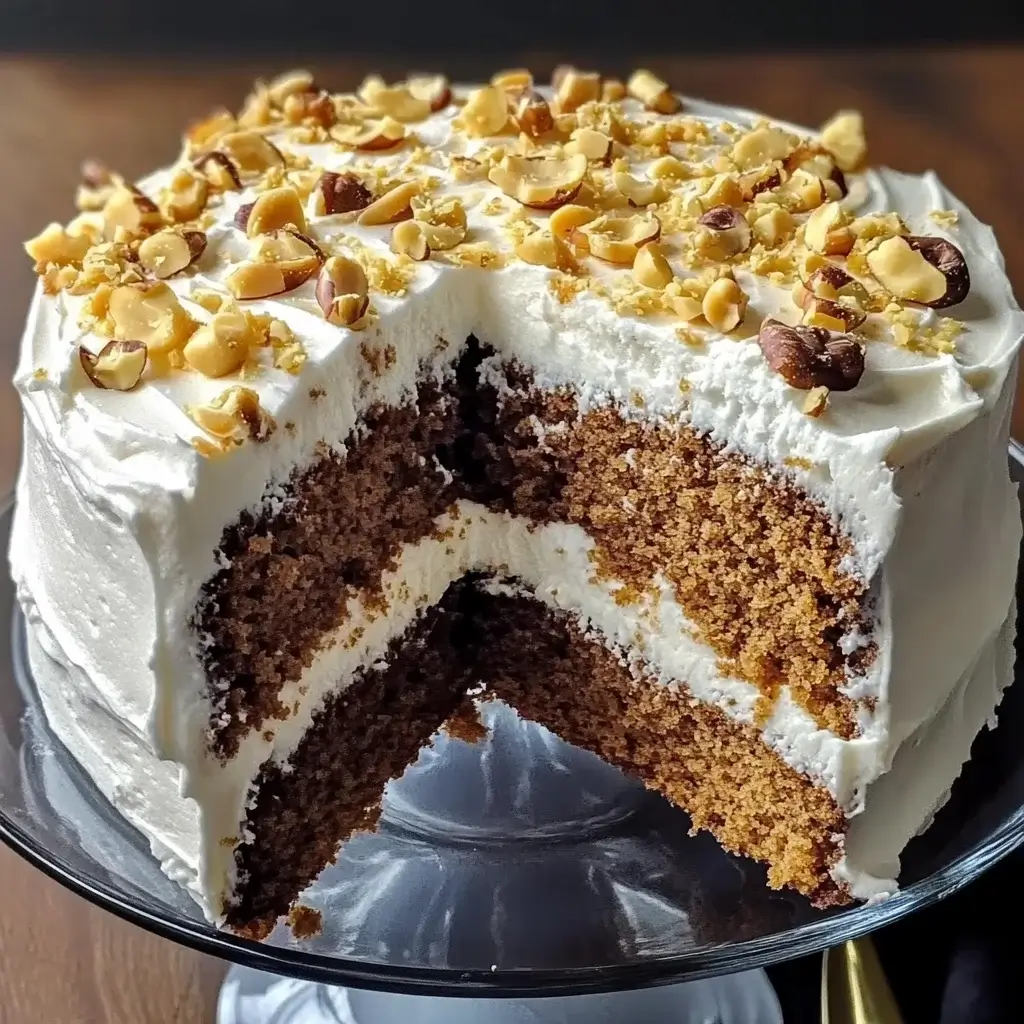
There are certain flavors that transport you, and for me, the distinct, bold taste of black walnuts is one of them. This Black Walnut Cake isn’t just a dessert; it’s an experience, a nostalgic nod to old-fashioned baking where unique, locally-sourced ingredients were treasured. I first encountered a true black walnut cake at a community potluck years ago, brought by an elderly woman whose recipe had been passed down through generations. The aroma alone was intoxicating – rich, earthy, and unlike any other nut I’d baked with. One bite, and I was smitten. The cake was incredibly moist, with a tender crumb that perfectly complemented the robust, slightly tannic, and deeply satisfying crunch of the black walnuts. My family, initially curious about this “different” kind of walnut, quickly became converts. It’s now a requested favorite for holiday gatherings and special occasions, a cake that always sparks conversation and earns rave reviews for its unique and unforgettable character. It’s more than just a cake; it’s a taste of heritage.
Why This Black Walnut Cake is Unforgettable
In a culinary landscape often dominated by familiar flavors, this Black Walnut Cake stands as a testament to the unique and the exceptional. It’s not just another nut cake; it’s a culinary journey that offers a distinct and memorable taste experience, setting it apart for several compelling reasons.
The most significant factor is, undoubtedly, the star ingredient: black walnuts. Unlike their milder English walnut cousins, black walnuts possess an intensely aromatic, earthy, and bold flavor profile. It’s a taste that is both wild and sophisticated, with hints of fruitiness and a satisfying tannic bite that is truly unique. When incorporated into a cake, they don’t just add texture; they impart a profound, rich nuttiness that permeates every crumb, creating a flavor that is complex and deeply satisfying. For those who have never tried them, the experience is often a revelation.
Beyond the unique flavor of the nuts, this specific recipe yields an exceptionally moist and tender crumb. This is achieved through a careful balance of ingredients – the richness of butter, the tenderizing effect of buttermilk, and the precise ratio of wet to dry ingredients. The cake isn’t heavy or dense; instead, it’s light yet substantial, providing the perfect canvas for the robust walnuts. This delightful texture ensures that each bite is a pleasure, melting in your mouth while delivering that signature black walnut punch.
The cake strikes a perfect balance between sweetness and nuttiness. The sweetness of the cake itself, often enhanced by a complementary frosting like cream cheese or a simple caramel glaze, is carefully calibrated so as not to overpower the distinctive flavor of the black walnuts. Instead, it enhances it, creating a harmonious blend where each element shines. This balance prevents the cake from becoming cloyingly sweet, allowing the sophisticated character of the black walnuts to take center stage.
There’s often a sense of tradition and heritage associated with black walnut cake. For many, it’s a flavor linked to specific regions, family recipes passed down through generations, or cherished holiday memories. Black walnuts were historically foraged and treasured, making cakes like this a special treat. Baking and enjoying this cake can evoke a sense of connection to the past and to simpler, more resourceful times. This nostalgic quality adds an emotional depth to the eating experience.
The cake also offers versatility in its presentation. While a classic cream cheese frosting is a popular and delicious pairing, complementing the earthy nuts with its tangy sweetness, this cake also stands beautifully on its own with a simple dusting of powdered sugar or a light glaze. It can be a rustic, home-style cake or dressed up for a more elegant occasion. This adaptability makes it suitable for a wide range of events, from casual family dinners to festive holiday spreads.
Finally, it’s the element of surprise and discovery for those unfamiliar with black walnuts. Serving this cake often leads to conversations about its unique flavor, its origins, and the joy of experiencing something new and different. It’s a cake that doesn’t just satisfy a sweet tooth; it piques curiosity and broadens palates.
In essence, this Black Walnut Cake is unforgettable because it offers a rare combination: a truly unique and bold flavor, a wonderfully moist texture, a connection to tradition, and the ability to delight and surprise. It’s a celebration of a remarkable ingredient, transformed into a dessert that lingers pleasantly on the palate and in the memory.
Black Walnut Cake: Complete Ingredients List
To create this exceptional Black Walnut Cake, you’ll need a selection of quality ingredients. The star, of course, is the black walnuts, but the supporting cast is equally important for achieving that perfect texture and flavor.
For the Black Walnut Cake Layers (makes two 8-inch or 9-inch round layers):
- All-Purpose Flour: 2 ½ cups (approximately 300-312g), spooned and leveled
- Baking Powder: 2 teaspoons
- Baking Soda: ½ teaspoon
- Salt: ½ teaspoon
- Unsalted Butter: 1 cup (2 sticks or 227g), softened to room temperature
- Granulated Sugar: 1 ½ cups (300g)
- Light Brown Sugar: ½ cup (100g), packed
- Eggs: 4 large, at room temperature
- Vanilla Extract: 2 teaspoons (pure vanilla extract recommended)
- Buttermilk: 1 cup (240ml), at room temperature
- Black Walnuts: 1 ½ cups (approximately 150-180g), toasted and roughly chopped
For the Classic Cream Cheese Frosting:
- Cream Cheese: 8 ounces (227g), full-fat, softened to room temperature
- Unsalted Butter: ½ cup (1 stick or 113g), softened to room temperature
- Powdered Sugar: 3 ½ to 4 cups (approximately 420-480g), sifted
- Vanilla Extract: 1 teaspoon (pure vanilla extract recommended)
- Salt: ¼ teaspoon (or a pinch, to balance sweetness)
- Milk or Heavy Cream (Optional): 1-2 tablespoons, if needed to reach desired consistency
- Chopped Black Walnuts (Optional for Garnish): ¼ cup, toasted
Ingredient Notes & Substitutions:
- Black Walnuts: These are crucial for the authentic flavor. They have a much bolder, earthier taste than English walnuts. If you absolutely cannot find them, English walnuts can be used, but the cake will have a very different, milder character. Always toast black walnuts to enhance their flavor and reduce any potential bitterness.
- Buttermilk: This acidic ingredient reacts with the baking soda to create a tender crumb and adds a subtle tang. If you don’t have buttermilk, you can make a substitute: for 1 cup of buttermilk, mix 1 tablespoon of white vinegar or lemon juice into 1 cup of regular milk and let it sit for 5-10 minutes until it curdles slightly.
- Room Temperature Ingredients: Using room temperature butter, eggs, and buttermilk is vital. Cold ingredients don’t emulsify properly, which can result in a dense cake. Butter should be soft enough that your finger leaves an indent but not greasy or melted. Eggs can be quickly brought to room temperature by placing them in a bowl of warm (not hot) water for 5-10 minutes.
- Flour Measurement: For accuracy and to avoid a dry cake, use the “spoon and level” method for measuring flour. Gently spoon the flour into your measuring cup until it’s overflowing, then sweep off the excess with a straight edge. Do not scoop directly from the bag, as this compacts the flour.
- Sugars: The combination of granulated and brown sugar provides both structure and moisture, plus a hint of molasses flavor from the brown sugar that complements the black walnuts.
- Frosting: Cream cheese frosting is a classic pairing, but a caramel frosting, brown butter frosting, or even a simple vanilla buttercream would also be delicious. If you prefer a less sweet option, consider a simple glaze made with powdered sugar and milk or bourbon.
Gathering these ingredients and paying attention to details like temperature and measurement will set you on the path to a truly spectacular Black Walnut Cake.
Step-by-Step Instructions for Perfect Black Walnut Cake
Follow these comprehensive instructions to bake a delicious and memorable Black Walnut Cake with a luscious cream cheese frosting. Take your time, enjoy the process, and prepare for an incredible treat!
Part 1: Preparing the Black Walnut Cake Layers
- Preheat Oven and Prepare Pans:
- Position an oven rack in the center of the oven. Preheat the oven to 350°F (175°C).
- Grease two 8-inch or 9-inch round cake pans thoroughly with butter or cooking spray.
- Line the bottoms of the pans with parchment paper rounds. Grease the parchment paper as well.
- Lightly flour the insides of the pans (over the grease), tapping out any excess flour. This three-step process (grease-parchment-grease-flour) ensures the cakes release easily.
- Toast and Chop Black Walnuts:
- Spread the 1 ½ cups of black walnuts in a single layer on a baking sheet.
- Toast in the preheated oven for 5-8 minutes, or until they are fragrant and slightly darkened. Watch them carefully, as nuts can burn quickly. Alternatively, you can toast them in a dry skillet over medium heat for 3-5 minutes, stirring frequently.
- Let the toasted walnuts cool completely, then roughly chop them. Set aside.
- Combine Dry Ingredients:
- In a medium bowl, whisk together the 2 ½ cups of all-purpose flour, 2 teaspoons of baking powder, ½ teaspoon of baking soda, and ½ teaspoon of salt. Whisking helps to aerate the flour and distribute the leaveners evenly. Set aside.
- Cream Butter and Sugars:
- In the bowl of a stand mixer fitted with the paddle attachment, or in a large bowl using a handheld electric mixer, beat the 1 cup of softened unsalted butter on medium speed until creamy, about 1 minute.
- Add the 1 ½ cups of granulated sugar and ½ cup of packed light brown sugar to the butter.
- Beat on medium-high speed for 3-5 minutes, until the mixture is light, fluffy, and pale in color. Scrape down the sides and bottom of the bowl occasionally with a rubber spatula to ensure even mixing. This step incorporates air, which is crucial for a light cake texture.
- Add Eggs and Vanilla:
- Reduce the mixer speed to medium-low. Add the 4 large room-temperature eggs one at a time, beating well for about 30 seconds after each addition and scraping down the bowl as needed. Ensure each egg is fully incorporated before adding the next.
- Beat in the 2 teaspoons of pure vanilla extract.
- Alternate Wet and Dry Ingredients:
- With the mixer on low speed, add the dry ingredient mixture in three additions, alternating with the 1 cup of room-temperature buttermilk in two additions. Begin and end with the dry ingredients.
- Add approximately one-third of the dry ingredients and mix until just combined.
- Add half of the buttermilk and mix until just combined.
- Add another third of the dry ingredients and mix until just combined.
- Add the remaining half of the buttermilk and mix until just combined.
- Add the final third of the dry ingredients and mix until just barely combined.
- Important: Do not overmix at this stage. Mix only until the flour streaks disappear. Overmixing develops gluten and can lead to a tough cake.
- With the mixer on low speed, add the dry ingredient mixture in three additions, alternating with the 1 cup of room-temperature buttermilk in two additions. Begin and end with the dry ingredients.
- Fold in Black Walnuts:
- Remove the bowl from the mixer (if using a stand mixer). Add the 1 ½ cups of chopped, toasted black walnuts to the batter.
- Using a rubber spatula, gently fold the walnuts into the batter until they are evenly distributed.
- Divide Batter and Bake:
- Divide the cake batter evenly between the two prepared cake pans. Smooth the tops with the spatula.
- Bake in the preheated oven for 30-35 minutes for 9-inch pans, or 35-40 minutes for 8-inch pans. The cakes are done when they are golden brown, the edges pull away slightly from the sides of the pans, and a wooden toothpick or cake tester inserted into the center comes out clean or with a few moist crumbs attached.
- Start checking for doneness a few minutes before the minimum baking time, as oven temperatures can vary.
- Cool the Cakes:
- Once baked, carefully remove the cake pans from the oven and place them on a wire cooling rack.
- Let the cakes cool in the pans for 10-15 minutes. This allows them to set slightly and makes them easier to handle.
- After 10-15 minutes, carefully invert the cakes onto the wire rack. Peel off the parchment paper.
- Let the cakes cool completely to room temperature before frosting, which can take 2-3 hours. Attempting to frost warm cakes will result in melted, messy frosting.
Part 2: Preparing the Classic Cream Cheese Frosting
- Beat Cream Cheese and Butter:
- In the clean bowl of a stand mixer fitted with the paddle attachment, or in a large bowl using a handheld electric mixer, beat the 8 ounces of softened cream cheese and ½ cup of softened unsalted butter together on medium speed until smooth, creamy, and well combined, about 2-3 minutes. Scrape down the sides and bottom of the bowl.
- Add Powdered Sugar:
- Reduce the mixer speed to low. Gradually add the 3 ½ to 4 cups of sifted powdered sugar, one cup at a time, mixing until smooth after each addition. Sifting the powdered sugar prevents lumps.
- Once all the powdered sugar is incorporated, increase the mixer speed to medium-high and beat for 2-3 minutes until the frosting is light, fluffy, and smooth.
- Add Vanilla and Salt (and Liquid if needed):
- Beat in the 1 teaspoon of pure vanilla extract and ¼ teaspoon of salt. The salt enhances the flavors and balances the sweetness.
- If the frosting is too thick, add milk or heavy cream, 1 tablespoon at a time, beating well after each addition, until you reach your desired spreading consistency. If it’s too thin, add a little more sifted powdered sugar.
Part 3: Assembling and Frosting the Cake
- Level Cakes (Optional):
- Once the cake layers are completely cool, if they have domed tops, you can level them using a long serrated knife for a more professional-looking cake. Place a cake layer on a flat surface and gently saw off the domed part to create a flat surface.
- Frost the Cake:
- Place one cake layer, top-side down (if leveled) or top-side up, onto a cake stand or serving plate.
- Spread a generous layer of cream cheese frosting (about 1 to 1 ½ cups) evenly over the top of the first layer, right to the edges.
- Carefully place the second cake layer on top of the frosted layer, top-side down (if leveled, this provides a very flat surface for the top frosting) or top-side up.
- Apply a thin “crumb coat” of frosting all over the top and sides of the cake. This seals in any loose crumbs. Chill the cake in the refrigerator for 15-20 minutes to set the crumb coat.
- Once the crumb coat is set, apply the remaining frosting to the top and sides of the cake, using an offset spatula or a bench scraper to create a smooth or textured finish as desired.
- Garnish (Optional):
- Garnish the frosted cake with the ¼ cup of additional toasted and chopped black walnuts. You can press them onto the sides, sprinkle them on top, or create a decorative border.
- Chill and Serve:
- For the best flavor and easier slicing, it’s recommended to chill the frosted cake in the refrigerator for at least 30 minutes to an hour to allow the frosting to set.
- Before serving, let the cake sit at room temperature for about 20-30 minutes to allow the cake and frosting to soften slightly.
Enjoy your homemade Black Walnut Cake!
Nutrition Facts (Estimated)
Please note that these nutritional values are approximate and can vary significantly based on the specific brands of ingredients used, precise serving sizes, the exact amount of frosting applied, and any modifications made to the recipe. This estimation is for one slice, assuming the cake (with frosting) is cut into 12-16 servings.
- Servings: This recipe yields one 2-layer cake, which can be cut into approximately 12-16 slices.
- Estimated Calories per Serving (assuming 1/14th of the cake): Approximately 550-700 calories.
Breakdown of Key Nutritional Contributions (per serving, approximate):
- Fat: Significant, primarily from butter, black walnuts, cream cheese, and eggs. Black walnuts contribute heart-healthy monounsaturated and polyunsaturated fats, though they are calorically dense.
- Saturated Fat: Will be notable due to butter and cream cheese.
- Carbohydrates: High, mainly from flour and sugars (granulated, brown, and powdered).
- Fiber: Moderate, primarily from black walnuts and a small amount from flour.
- Sugar: High, from the sugars in the cake and frosting.
- Protein: Moderate, from eggs, flour, black walnuts, and cream cheese.
- Sodium: Moderate, from salt, baking soda, baking powder, and a small amount naturally in other ingredients.
- Cholesterol: Present, from eggs, butter, and cream cheese.
Key Nutrient Highlights:
- Black Walnuts: Provide good fats, protein, fiber, and minerals like magnesium, phosphorus, and manganese. They also contain antioxidants and unique compounds like juglone (which is mostly in the hull and roots, but traces can be in the nutmeat).
- Buttermilk & Cream Cheese: Contribute calcium.
- Eggs: Offer high-quality protein, vitamins D and B12.
Important Considerations:
- Portion Size: This is a rich, indulgent cake. Being mindful of portion sizes is important if you are tracking caloric or nutrient intake.
- Ingredient Variations: Using low-fat cream cheese or milk alternatives in frosting will alter the nutritional profile, typically reducing fat and calories but potentially changing texture and richness.
- Frosting Amount: The amount of frosting used can significantly impact the calorie and sugar content.
- Dietary Restrictions: This cake, as written, is not suitable for those with nut allergies (specifically walnut), gluten intolerance (unless made with gluten-free flour blends, which would require recipe adjustments), or dairy intolerance (unless dairy-free butter, buttermilk alternatives, and cream cheese alternatives are used).
This Black Walnut Cake is a delicious treat best enjoyed in moderation as part of a balanced diet. It’s a special occasion cake where the focus is on its unique flavor and indulgent qualities.
Preparation Time
Crafting this delightful Black Walnut Cake involves several stages. Understanding the time commitment will help you plan your baking adventure effectively.
- Active Preparation Time (Mixing, Chopping, Frosting): Approximately 45 – 60 minutes.
- This includes:
- Gathering and measuring ingredients (10-15 minutes).
- Toasting and chopping walnuts (10 minutes, including cooling time for chopping).
- Preparing cake batter (15-20 minutes).
- Making the frosting (10-15 minutes).
- Assembling and frosting the cake (can vary greatly based on your decorating skill and desired finish, but allow at least 15-20 minutes for a basic frosting job, more for intricate designs).
- This includes:
- Baking Time: Approximately 30-40 minutes (depending on pan size).
- Cooling Time (Crucial):
- Cooling in pans: 10-15 minutes.
- Cooling completely on wire racks: At least 2-3 hours. This step cannot be rushed if you plan to frost the cake. Frosting a warm cake will result in a melted, sliding mess.
- Chilling after crumb coat (optional but recommended): 15-20 minutes.
- Chilling after final frosting (recommended): At least 30 minutes to 1 hour.
- Total Estimated Time (from start to ready-to-serve, including full cooling and chilling): Approximately 4 to 5.5 hours.
Timeline Breakdown Example:
- Start to cakes in oven: ~35-45 minutes
- Baking: ~30-40 minutes
- Initial cooling in pans: ~10-15 minutes
- Cooling completely on racks: ~2-3 hours (during this time, you can clean up and prepare frosting ingredients)
- Making frosting & frosting cake: ~30-45 minutes (including crumb coat chill if doing)
- Final chill before serving: ~30-60 minutes
Tips for Time Management:
- Make Ahead:
- Cake Layers: Can be baked a day in advance. Once completely cool, wrap them tightly in plastic wrap and store at room temperature or in the refrigerator.
- Frosting: Can be made a day or two ahead and stored in an airtight container in the refrigerator. Let it come to room temperature and re-whip briefly before using.
- Toasted Walnuts: Can be toasted and chopped several days ahead and stored in an airtight container at room temperature.
- Multitasking: While cakes are baking or cooling, you can wash dishes, measure out frosting ingredients, or prepare other parts of your meal if applicable.
While it’s not a quick, last-minute dessert, the rich flavor and satisfying texture of a homemade Black Walnut Cake are well worth the time invested. Planning ahead will make the process smooth and enjoyable.
How to Serve Your Delicious Black Walnut Cake
Serving your beautifully baked Black Walnut Cake is the delightful culmination of your efforts. Here are some ideas to make the experience even more special, enhancing its unique character for various occasions.
- Occasions for Serving:
- Holiday Gatherings: Black Walnut Cake is a traditional favorite for Thanksgiving, Christmas, and New Year’s, offering a unique alternative to more common holiday desserts. Its rich, nutty flavor feels particularly festive.
- Special Family Dinners: Make any family meal memorable by concluding it with a slice of this distinctive cake.
- Birthdays for the Discerning Palate: For someone who appreciates unique flavors and homemade goodness, this cake makes a wonderful birthday treat.
- Potlucks and Community Events: Be prepared for compliments and recipe requests! Its unique profile will make it stand out.
- Autumnal Celebrations: The earthy notes of black walnuts pair beautifully with the fall season.
- Perfect Accompaniments:
- A Dollop of Freshly Whipped Cream: Lightly sweetened whipped cream provides a lovely contrast in texture and a mild counterpoint to the rich cake and frosting.
- A Scoop of Vanilla Bean Ice Cream: The cold creaminess of vanilla ice cream alongside a slice of room-temperature Black Walnut Cake is a classic and beloved pairing.
- A Hot Beverage:
- Coffee: A robust cup of black coffee or a latte beautifully complements the nutty, sweet flavors.
- Tea: A strong black tea (like Earl Grey or English Breakfast) or an herbal tea with spiced notes would also be excellent.
- Caramel Drizzle (Optional): If your frosting isn’t overly sweet, a light drizzle of homemade or good-quality store-bought caramel sauce can add another layer of decadence. This pairs especially well if you opt for a brown sugar or caramel frosting.
- Bourbon or Whiskey: For an adult pairing, a small glass of good quality bourbon or whiskey can complement the deep, earthy notes of the black walnuts. Some recipes even incorporate a touch of bourbon into the frosting or a glaze.
- Presentation Matters:
- Cake Stand: Showcase your creation on an elegant cake stand. This instantly elevates its presentation.
- Garnish Thoughtfully:
- Sprinkle additional toasted and chopped black walnuts on top or around the base of the cake.
- Arrange a few whole toasted black walnut halves artfully on top of each slice or around the cake’s crown.
- If you used fresh sage with pumpkin, here you might use nothing more than the walnuts themselves, or a very light dusting of powdered sugar if using a simpler glaze instead of a thick frosting.
- Slicing: For clean, neat slices, use a long, thin, sharp knife. Dip the knife in hot water and wipe it dry between cuts. This helps to cut through the frosting and cake smoothly.
- Serving Temperature:
- While the cake should be stored in the refrigerator if it has cream cheese frosting and won’t be eaten within a day, it’s best served at room temperature or slightly cool. Allow slices to sit out for about 20-30 minutes before serving if they’ve been refrigerated, as this allows the flavors and textures to be at their best.
However you choose to serve it, let the unique and wonderful flavor of the Black Walnut Cake be the star. It’s a dessert that invites savoring and appreciation.
Additional Tips for the Best Black Walnut Cake
Achieving a truly exceptional Black Walnut Cake goes beyond just following the recipe. Here are five additional tips to help you perfect this unique and flavorful dessert:
- Source High-Quality, Fresh Black Walnuts: The flavor of your cake hinges on this star ingredient. Black walnuts can be harder to find than English walnuts and can sometimes have a shorter shelf life if not stored properly. Purchase them from a reputable source, ideally in vacuum-sealed packages or from a bulk bin where turnover is high. If you forage them yourself, ensure they are properly hulled, cleaned, dried, and shelled. Store shelled black walnuts in an airtight container in the refrigerator for a few weeks or in the freezer for several months to maintain freshness and prevent them from becoming rancid or bitter.
- Don’t Skip Toasting the Black Walnuts: This step is crucial and dramatically enhances their flavor. Toasting brings out their natural oils, deepens their earthy notes, and gives them a delightful crunch. It also helps to mitigate any slight bitterness that raw black walnuts can sometimes have. Whether you toast them in the oven or a dry skillet, watch them carefully to prevent burning, as this can happen quickly and will impart an undesirable acrid taste.
- Measure Flour Accurately – Spoon and Level: The amount of flour is critical to the cake’s texture. Too much flour will result in a dry, dense cake. The most accurate way to measure flour without a kitchen scale is the “spoon and level” method. Use a spoon to lightly scoop flour into your measuring cup until it’s mounded over the top. Then, use the straight edge of a knife or a spatula to level off the excess flour. Do not scoop the measuring cup directly into the flour bag, as this compacts the flour and you’ll end up using too much.
- Ensure All “Creaming” Ingredients are at Proper Room Temperature: This specifically refers to your butter, eggs, and dairy (buttermilk and cream cheese for the frosting). Room temperature ingredients emulsify much better, creating a lighter, more voluminous batter and a tenderer crumb.
- Butter: Should be soft enough that your finger leaves an indent when pressed lightly, but not greasy or melted (around 65-68°F or 18-20°C).
- Eggs: Whisk up more easily and incorporate better. To quickly bring eggs to room temp, place them in a bowl of warm (not hot) water for 5-10 minutes.
- Buttermilk/Cream Cheese: Cold dairy won’t blend smoothly with other ingredients.
This attention to temperature is key for the creaming process, which incorporates air and is foundational to a great cake structure.
- Cool Cake Layers Completely and Undisturbed Before Frosting: Patience is a virtue in cake baking, especially during the cooling stage. Attempting to frost even a slightly warm cake will cause the frosting (especially a butter and cream cheese-based one) to melt, slide, and become a soupy mess. Allow the cake layers to cool in their pans for 10-15 minutes, then invert them onto wire racks to cool completely to room temperature, which can take 2-3 hours. Ensure good air circulation around the racks. This complete cooling allows the cake structure to set firmly, making it easier to handle and frost neatly.
By incorporating these pro tips into your baking routine, your Black Walnut Cake will not only taste incredible due to the unique nuts but will also boast a superior texture and professional finish.
Frequently Asked Questions (FAQ) about Black Walnut Cake
Here are answers to some common questions you might have about baking and enjoying this distinctive Black Walnut Cake:
- Q: What is the main difference between black walnuts and regular English walnuts? Can I substitute English walnuts in this recipe?
- A: The difference is significant, primarily in flavor. Black walnuts have a bold, earthy, slightly tannic, and very distinctive flavor that is much more intense than English walnuts. Their shells are also much harder to crack. English walnuts (the common type found in most grocery stores) are milder, sweeter, and more buttery. While you can technically substitute English walnuts in this recipe if black walnuts are unavailable, it will fundamentally change the cake’s character. It will become an “English Walnut Cake,” which is also delicious but will lack the unique, robust flavor profile that defines a traditional Black Walnut Cake. If substituting, the amount would be the same.
- Q: Black walnuts can be hard to find in my local grocery store. Where can I typically purchase them?
- A: You’re right, black walnuts aren’t as ubiquitous as English walnuts. Here are some places to look:
- Specialty Food Stores: Stores that focus on gourmet or regional ingredients may carry them.
- Farmers’ Markets: In areas where black walnut trees grow, you might find them at farmers’ markets in the fall, either shelled or unshelled.
- Online Retailers: Numerous online retailers specialize in nuts or carry black walnuts. This is often the most reliable option. Look for reputable brands.
- Larger Supermarkets with Gourmet Sections: Some larger chain supermarkets might have them in their specialty baking or nut sections.
- Foraging (with caution): If you live in an area where black walnut trees are common (Eastern and Central US), you can forage them in the fall. However, this requires knowledge of proper identification, harvesting, hulling, drying, and shelling, which is a labor-intensive process.
- A: You’re right, black walnuts aren’t as ubiquitous as English walnuts. Here are some places to look:
- Q: Can I make this Black Walnut Cake ahead of time? How should I store it?
- A: Yes, this cake lends itself well to being made ahead.
- Cake Layers: Bake the layers up to 1-2 days in advance. Once completely cool, wrap them tightly in plastic wrap (individually) and store them at room temperature or in the refrigerator. If refrigerating, let them come to room temperature before frosting.
- Frosting: Cream cheese frosting can be made up to 2-3 days ahead and stored in an airtight container in the refrigerator. Let it sit at room temperature for about 30-60 minutes and re-whip briefly with an electric mixer to restore its fluffy texture before using.
- Frosted Cake: A frosted Black Walnut Cake with cream cheese frosting should be stored in an airtight cake carrier in the refrigerator due to the cream cheese. It will keep well for 3-4 days. For the best taste and texture, allow slices to sit at room temperature for about 20-30 minutes before serving.
- A: Yes, this cake lends itself well to being made ahead.
- Q: Can I convert this recipe to make Black Walnut Cupcakes?
- A: Yes, this cake batter is well-suited for cupcakes. The recipe should yield approximately 24 standard-sized cupcakes.
- Line standard muffin tins with paper liners.
- Fill each liner about two-thirds full with batter.
- Baking time will be shorter, typically around 18-22 minutes at 350°F (175°C). Start checking for doneness (a toothpick inserted into the center comes out clean) around the 18-minute mark.
- Let the cupcakes cool in the tins for a few minutes before transferring them to a wire rack to cool completely before frosting.
- A: Yes, this cake batter is well-suited for cupcakes. The recipe should yield approximately 24 standard-sized cupcakes.
- Q: My black walnuts sometimes have a slightly bitter or off-taste. How can I prevent this?
- A: Bitterness in black walnuts can stem from a few factors:
- Freshness: Walnuts (all types) contain oils that can go rancid over time, leading to an off or bitter taste. Always buy the freshest black walnuts possible and check expiration dates if packaged.
- Storage: Store shelled black walnuts in an airtight container in the refrigerator for short-term use (a few weeks) or in the freezer for longer-term storage (several months to a year). This slows down the oxidation of oils.
- Toasting: As mentioned in the tips, toasting the walnuts before adding them to the batter not only enhances their flavor but can also help mellow out any slight bitterness.
- Shell/Hull Remnants: Ensure all pieces of the hard shell and the papery membrane between the nutmeat and shell are meticulously removed, as these can be bitter. This is more of a concern if you are shelling them yourself.
- A: Bitterness in black walnuts can stem from a few factors:
By addressing these common queries, you should feel even more confident in tackling this wonderful Black Walnut Cake recipe!
Print
Black Walnut Cake recipe
Ingredients
-
- All-Purpose Flour: 2 ½ cups (approximately 300-312g), spooned and leveled
-
- Baking Powder: 2 teaspoons
-
- Baking Soda: ½ teaspoon
-
- Salt: ½ teaspoon
-
- Unsalted Butter: 1 cup (2 sticks or 227g), softened to room temperature
-
- Granulated Sugar: 1 ½ cups (300g)
-
- Light Brown Sugar: ½ cup (100g), packed
-
- Eggs: 4 large, at room temperature
-
- Vanilla Extract: 2 teaspoons (pure vanilla extract recommended)
-
- Buttermilk: 1 cup (240ml), at room temperature
-
- Black Walnuts: 1 ½ cups (approximately 150-180g), toasted and roughly chopped
For the Classic Cream Cheese Frosting:
-
- Cream Cheese: 8 ounces (227g), full-fat, softened to room temperature
-
- Unsalted Butter: ½ cup (1 stick or 113g), softened to room temperature
-
- Powdered Sugar: 3 ½ to 4 cups (approximately 420-480g), sifted
-
- Vanilla Extract: 1 teaspoon (pure vanilla extract recommended)
-
- Salt: ¼ teaspoon (or a pinch, to balance sweetness)
-
- Milk or Heavy Cream (Optional): 1-2 tablespoons, if needed to reach desired consistency
-
- Chopped Black Walnuts (Optional for Garnish): ¼ cup, toasted
Instructions
-
- Preheat Oven and Prepare Pans:
-
- Position an oven rack in the center of the oven. Preheat the oven to 350°F (175°C).
-
- Grease two 8-inch or 9-inch round cake pans thoroughly with butter or cooking spray.
-
- Line the bottoms of the pans with parchment paper rounds. Grease the parchment paper as well.
-
- Lightly flour the insides of the pans (over the grease), tapping out any excess flour. This three-step process (grease-parchment-grease-flour) ensures the cakes release easily.
-
- Preheat Oven and Prepare Pans:
-
- Toast and Chop Black Walnuts:
-
- Spread the 1 ½ cups of black walnuts in a single layer on a baking sheet.
-
- Toast in the preheated oven for 5-8 minutes, or until they are fragrant and slightly darkened. Watch them carefully, as nuts can burn quickly. Alternatively, you can toast them in a dry skillet over medium heat for 3-5 minutes, stirring frequently.
-
- Let the toasted walnuts cool completely, then roughly chop them. Set aside.
-
- Toast and Chop Black Walnuts:
-
- Combine Dry Ingredients:
-
- In a medium bowl, whisk together the 2 ½ cups of all-purpose flour, 2 teaspoons of baking powder, ½ teaspoon of baking soda, and ½ teaspoon of salt. Whisking helps to aerate the flour and distribute the leaveners evenly. Set aside.
-
- Combine Dry Ingredients:
-
- Cream Butter and Sugars:
-
- In the bowl of a stand mixer fitted with the paddle attachment, or in a large bowl using a handheld electric mixer, beat the 1 cup of softened unsalted butter on medium speed until creamy, about 1 minute.
-
- Add the 1 ½ cups of granulated sugar and ½ cup of packed light brown sugar to the butter.
-
- Beat on medium-high speed for 3-5 minutes, until the mixture is light, fluffy, and pale in color. Scrape down the sides and bottom of the bowl occasionally with a rubber spatula to ensure even mixing. This step incorporates air, which is crucial for a light cake texture.
-
- Cream Butter and Sugars:
-
- Add Eggs and Vanilla:
-
- Reduce the mixer speed to medium-low. Add the 4 large room-temperature eggs one at a time, beating well for about 30 seconds after each addition and scraping down the bowl as needed. Ensure each egg is fully incorporated before adding the next.
-
- Beat in the 2 teaspoons of pure vanilla extract.
-
- Add Eggs and Vanilla:
-
- Alternate Wet and Dry Ingredients:
-
- With the mixer on low speed, add the dry ingredient mixture in three additions, alternating with the 1 cup of room-temperature buttermilk in two additions. Begin and end with the dry ingredients.
-
- Add approximately one-third of the dry ingredients and mix until just combined.
-
- Add half of the buttermilk and mix until just combined.
-
- Add another third of the dry ingredients and mix until just combined.
-
- Add the remaining half of the buttermilk and mix until just combined.
-
- Add the final third of the dry ingredients and mix until just barely combined.
-
- With the mixer on low speed, add the dry ingredient mixture in three additions, alternating with the 1 cup of room-temperature buttermilk in two additions. Begin and end with the dry ingredients.
-
- Important: Do not overmix at this stage. Mix only until the flour streaks disappear. Overmixing develops gluten and can lead to a tough cake.
-
- Alternate Wet and Dry Ingredients:
-
- Fold in Black Walnuts:
-
- Remove the bowl from the mixer (if using a stand mixer). Add the 1 ½ cups of chopped, toasted black walnuts to the batter.
-
- Using a rubber spatula, gently fold the walnuts into the batter until they are evenly distributed.
-
- Fold in Black Walnuts:
-
- Divide Batter and Bake:
-
- Divide the cake batter evenly between the two prepared cake pans. Smooth the tops with the spatula.
-
- Bake in the preheated oven for 30-35 minutes for 9-inch pans, or 35-40 minutes for 8-inch pans. The cakes are done when they are golden brown, the edges pull away slightly from the sides of the pans, and a wooden toothpick or cake tester inserted into the center comes out clean or with a few moist crumbs attached.
-
- Start checking for doneness a few minutes before the minimum baking time, as oven temperatures can vary.
-
- Divide Batter and Bake:
-
- Cool the Cakes:
-
- Once baked, carefully remove the cake pans from the oven and place them on a wire cooling rack.
-
- Let the cakes cool in the pans for 10-15 minutes. This allows them to set slightly and makes them easier to handle.
-
- After 10-15 minutes, carefully invert the cakes onto the wire rack. Peel off the parchment paper.
-
- Let the cakes cool completely to room temperature before frosting, which can take 2-3 hours. Attempting to frost warm cakes will result in melted, messy frosting.
-
- Cool the Cakes:
Part 2: Preparing the Classic Cream Cheese Frosting
-
- Beat Cream Cheese and Butter:
-
- In the clean bowl of a stand mixer fitted with the paddle attachment, or in a large bowl using a handheld electric mixer, beat the 8 ounces of softened cream cheese and ½ cup of softened unsalted butter together on medium speed until smooth, creamy, and well combined, about 2-3 minutes. Scrape down the sides and bottom of the bowl.
-
- Beat Cream Cheese and Butter:
-
- Add Powdered Sugar:
-
- Reduce the mixer speed to low. Gradually add the 3 ½ to 4 cups of sifted powdered sugar, one cup at a time, mixing until smooth after each addition. Sifting the powdered sugar prevents lumps.
-
- Once all the powdered sugar is incorporated, increase the mixer speed to medium-high and beat for 2-3 minutes until the frosting is light, fluffy, and smooth.
-
- Add Powdered Sugar:
-
- Add Vanilla and Salt (and Liquid if needed):
-
- Beat in the 1 teaspoon of pure vanilla extract and ¼ teaspoon of salt. The salt enhances the flavors and balances the sweetness.
-
- If the frosting is too thick, add milk or heavy cream, 1 tablespoon at a time, beating well after each addition, until you reach your desired spreading consistency. If it’s too thin, add a little more sifted powdered sugar.
-
- Add Vanilla and Salt (and Liquid if needed):
Part 3: Assembling and Frosting the Cake
-
- Level Cakes (Optional):
-
- Once the cake layers are completely cool, if they have domed tops, you can level them using a long serrated knife for a more professional-looking cake. Place a cake layer on a flat surface and gently saw off the domed part to create a flat surface.
-
- Level Cakes (Optional):
-
- Frost the Cake:
-
- Place one cake layer, top-side down (if leveled) or top-side up, onto a cake stand or serving plate.
-
- Spread a generous layer of cream cheese frosting (about 1 to 1 ½ cups) evenly over the top of the first layer, right to the edges.
-
- Carefully place the second cake layer on top of the frosted layer, top-side down (if leveled, this provides a very flat surface for the top frosting) or top-side up.
-
- Apply a thin “crumb coat” of frosting all over the top and sides of the cake. This seals in any loose crumbs. Chill the cake in the refrigerator for 15-20 minutes to set the crumb coat.
-
- Once the crumb coat is set, apply the remaining frosting to the top and sides of the cake, using an offset spatula or a bench scraper to create a smooth or textured finish as desired.
-
- Frost the Cake:
-
- Garnish (Optional):
-
- Garnish the frosted cake with the ¼ cup of additional toasted and chopped black walnuts. You can press them onto the sides, sprinkle them on top, or create a decorative border.
-
- Garnish (Optional):
-
- Chill and Serve:
-
- For the best flavor and easier slicing, it’s recommended to chill the frosted cake in the refrigerator for at least 30 minutes to an hour to allow the frosting to set.
-
- Before serving, let the cake sit at room temperature for about 20-30 minutes to allow the cake and frosting to soften slightly.
-
- Chill and Serve:
Nutrition
- Serving Size: one normal portion
- Calories: 550-700