
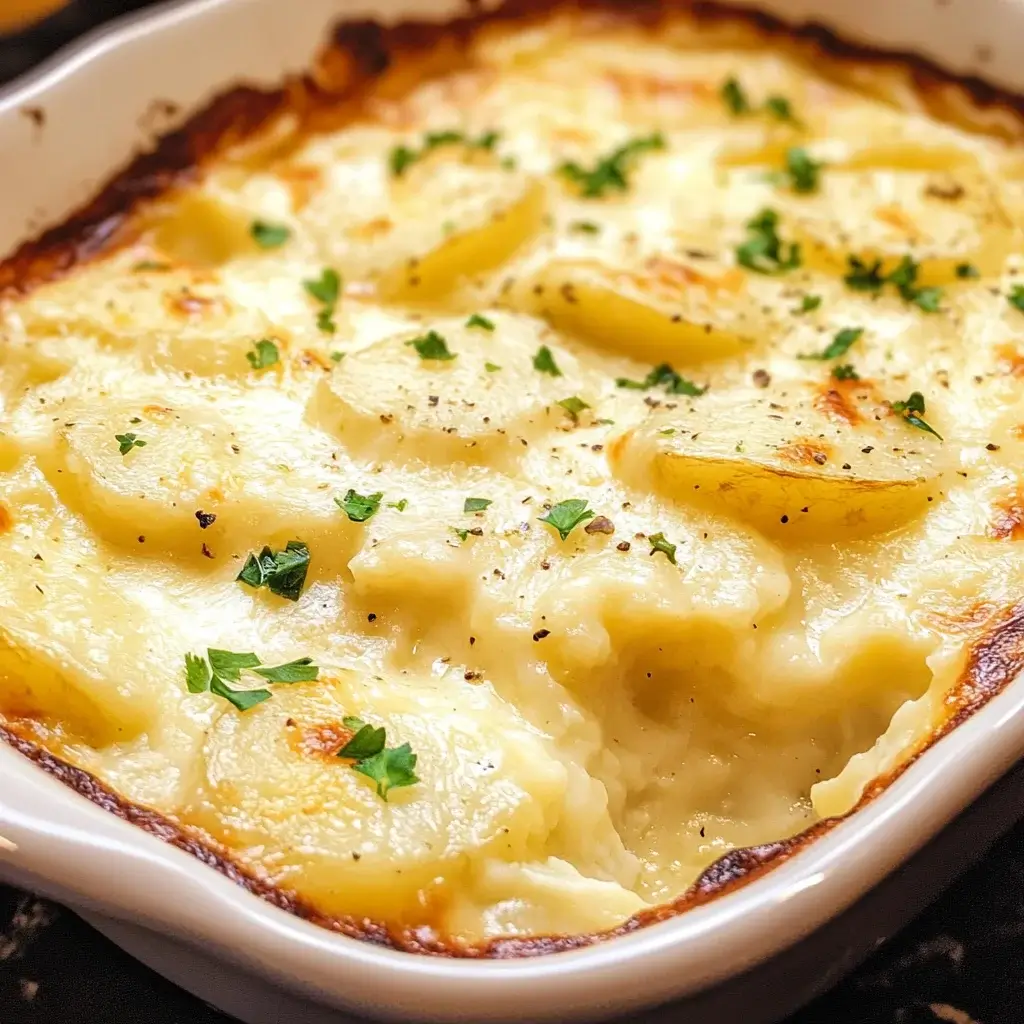
There are certain dishes that define comfort, the ones that feel like a warm blanket on a chilly evening and a celebratory hug on a holiday. For me, at the very top of that list, sits a bubbling, golden-brown casserole of scalloped potatoes. For years, I was intimidated by them. I’d heard the horror stories: potatoes that were still crunchy in the middle, sauces that curdled into a greasy mess, a final dish that was watery and sad. It felt like a culinary feat reserved for grandmothers with decades of kitchen wisdom. Then, I found this method—a straightforward, no-fail approach that demystifies the entire process. The first time I pulled this casserole from the oven, my kitchen filled with the most incredible aroma of creamy, cheesy, baked goodness. The top was perfectly browned and bubbling, and when I scooped out the first portion, the layers held together in a rich, velvety sauce. My family, gathered for a Sunday dinner, fell silent. It was the kind of quiet that means something is so delicious, words are unnecessary. This recipe transformed scalloped potatoes from an intimidating challenge into my go-to special occasion side dish. It’s rich, it’s decadent, and most importantly, it’s easy. This is the recipe that proves anyone can master the art of perfect, creamy, dreamy scalloped potatoes.
The Ultimate Easy Scalloped Potatoes: A Complete Recipe
This recipe is designed to be a foolproof guide to creating classic, creamy, and cheesy scalloped potatoes from scratch. By creating a stable, flavorful cheese sauce and using the right kind of potatoes, we eliminate the common pitfalls and guarantee a perfect, crowd-pleasing result every time.
Yields: 8-10 side dish servings
Prep time: 25 minutes
Cook time: 1 hour 15 minutes
Total time: 1 hour 40 minutes
Ingredients
- Potatoes: 4 lbs (about 1.8 kg) Yukon Gold or Russet potatoes, peeled
- Aromatics:
- 1 large yellow onion, thinly sliced
- 2-3 cloves garlic, minced
- For the Creamy Cheese Sauce:
- 4 tablespoons unsalted butter
- 1/4 cup all-purpose flour
- 2 cups whole milk, warmed
- 1 cup heavy cream, warmed
- 1 teaspoon kosher salt
- 1/2 teaspoon black pepper, freshly ground
- 1/4 teaspoon ground nutmeg (optional, but highly recommended)
- 1/4 teaspoon paprika
- 2.5 cups (about 10 oz or 280g) sharp cheddar or Gruyère cheese, freshly grated, divided
Ingredient Notes & Substitutions
The magic of scalloped potatoes is in the harmony of simple ingredients. Here’s a closer look at the key players and how to choose them.
- The Potatoes: The Star of the Show
- The type of potato you use is one of the most critical decisions. You need a potato with the right starch content to help thicken the sauce and hold its shape.
- Best Choice (Yukon Gold): This is my top pick. Yukon Golds have a medium starch content and a naturally buttery flavor. They hold their shape beautifully after baking but are still creamy, striking the perfect balance.
- Excellent Alternative (Russet): Russets are high in starch. This is a benefit because the starch they release will help to create a thicker, creamier sauce. The downside is that they can sometimes break down and become mushy if sliced too thinly or overcooked.
- What to Avoid (Waxy Potatoes): Avoid very waxy potatoes like red potatoes. They have a low starch content and tend to hold their shape so well that they don’t absorb the sauce as effectively and can result in a thinner, more watery final dish.
- The Cheese: The Secret to a Rich Sauce
- The quality and type of cheese will define the flavor profile of your dish.
- Sharp Cheddar: A classic choice that provides a familiar, tangy, and robust cheese flavor. A white sharp cheddar looks particularly elegant.
- Gruyère: This is the secret to a restaurant-quality flavor. Gruyère is a Swiss cheese with a fantastic melting quality and a complex, nutty, and slightly sweet flavor that perfectly complements the potatoes.
- A Combination: My favorite method is to use a mix of both sharp cheddar and Gruyère for the ultimate balance of tang and nutty richness.
- Crucial Tip: Always grate your own cheese from a block. Pre-shredded cheeses are coated in starches like cellulose to prevent them from clumping in the bag. These starches can prevent the cheese from melting smoothly, often resulting in a grainy or greasy sauce.
- The Dairy: The Foundation of Creaminess
- The combination of whole milk and heavy cream provides the perfect balance. The milk forms the bulk of the sauce, while the cream adds a luxurious richness and acts as an insurance policy against the sauce curdling. Using only milk can work, but the sauce will be less decadent. Using only cream can sometimes feel too heavy. This 50/50 blend is the sweet spot.
- The Slicing: The Key to Perfect Texture
- The thickness of your potato slices is paramount. Aim for slices that are about 1/8-inch thick. If they are too thick, they won’t cook through in time. If they are too thin, they can turn to mush.
- The Best Tool: A mandoline slicer is the absolute best tool for this job. It creates perfectly uniform slices quickly and easily, which is the key to ensuring all the potatoes cook evenly. If you don’t have a mandoline, use a very sharp chef’s knife and take your time.
Step-by-Step Instructions for Foolproof Results
This method builds a stable, separate sauce, which is the key to preventing curdling and ensuring the potatoes are evenly coated and cooked to perfection.
Step 1: Preheat and Prepare
Preheat your oven to 400°F (200°C). Generously butter a 9×13-inch baking dish or a similar 3-quart casserole dish.
Peel your potatoes and slice them into uniform 1/8-inch thick rounds using a mandoline or a sharp knife. To prevent the sliced potatoes from browning while you work, place them in a large bowl of cold water. When you’re ready to assemble, drain them and pat them thoroughly dry.
Step 2: Make the Creamy Cheese Sauce
In a medium saucepan over medium heat, melt the 4 tablespoons of butter. Once the butter is melted, whisk in the 1/4 cup of all-purpose flour. Cook, whisking constantly, for about 1 minute. This creates a “roux,” which will thicken our sauce.
While continuing to whisk, slowly pour in the warmed milk and heavy cream. It’s important to add the liquid slowly and whisk constantly to prevent lumps from forming. Continue to cook, whisking frequently, until the sauce comes to a gentle simmer and has thickened enough to coat the back of a spoon (about 5-7 minutes).
Remove the saucepan from the heat. Stir in the salt, pepper, nutmeg, and paprika. Gradually add 2 cups of the grated cheese, stirring until the cheese is completely melted and the sauce is smooth. Set aside.
Step 3: Layer the Casserole
Arrange about one-third of the dried potato slices in an overlapping layer on the bottom of the prepared baking dish. Sprinkle with about half of the thinly sliced onions.
Repeat with another one-third of the potatoes and the remaining onions. Top with the final one-third of the potato slices, arranging them in an attractive pattern if you like.
Step 4: Pour the Sauce and Bake
Carefully and evenly pour the prepared cheese sauce over the layered potatoes. Gently press down on the potatoes with a spatula to ensure they are submerged in the sauce.
Sprinkle the remaining 1/2 cup of grated cheese evenly over the top.
Step 5: The Two-Stage Bake
Cover the baking dish tightly with aluminum foil. Bake for 45 minutes. This traps the steam and ensures the potatoes cook through evenly.
After 45 minutes, carefully remove the foil. Return the dish to the oven and continue to bake, uncovered, for another 25-30 minutes, or until the top is deeply golden brown and bubbly, and the potatoes are tender. You can test for doneness by inserting a sharp knife into the center of the casserole—it should slide in with little resistance.
Step 6: The Crucial Rest
Remove the scalloped potatoes from the oven and let them rest for at least 15-20 minutes before serving. This is a critical step! It allows the sauce to cool slightly and set up. If you cut into it immediately, the sauce will be runny. Resting ensures a thick, creamy consistency.
Nutrition Facts
- Servings: 8-10 (as a side dish)
- Calories per serving: Approximately 450-550 kcal
Disclaimer: This is a decadent side dish. The nutritional information is an estimate and will vary based on the exact size of the potatoes and the types of cheese and dairy used. It is provided for informational purposes only.
Preparation Time Breakdown
A clear timeline to help you plan this classic dish.
- Mise en Place (Prep Time): 25 minutes
- Peeling and slicing potatoes: 15 minutes
- Slicing onion, mincing garlic, grating cheese: 10 minutes
- Active Cooking Time: 10 minutes
- Making the cheese sauce: 10 minutes
- Hands-Off Baking and Resting Time: ~1 hour 30 minutes
- Baking time (covered and uncovered): 1 hour 10-15 minutes
- Resting time: 15-20 minutes
- Total Time: Approximately 1 hour 40 minutes
How to Serve Creamy Scalloped Potatoes
Scalloped potatoes are the ultimate side dish, capable of elevating any meal into a special occasion.
- As a Holiday Centerpiece Side: They are a must-have on any holiday table.
- Thanksgiving: Serve alongside roasted turkey and green bean casserole.
- Christmas: The perfect partner for a glazed ham or a standing rib roast.
- Easter: A classic accompaniment to roasted lamb.
- As a Comforting Weeknight Upgrade: Make any weeknight feel special.
- Serve with pan-seared pork chops.
- Alongside a classic meatloaf.
- With a perfectly grilled steak.
- The Perfect Garnish: A little freshness cuts through the richness beautifully.
- Fresh Chives: Finely chopped chives add a mild, fresh onion flavor.
- Fresh Parsley: Chopped flat-leaf parsley adds a pop of color and clean flavor.
- Fresh Thyme: A sprinkle of fresh thyme leaves complements the earthy potatoes.
5 Pro Tips for Scalloped Potato Perfection
- A Mandoline is Your Best Friend: I cannot stress this enough. The key to evenly cooked scalloped potatoes is uniformly sliced potatoes. A mandoline slicer is the fastest and most effective way to achieve perfect 1/8-inch slices. It’s a worthy investment for this dish alone.
- Grate Your Own Cheese. Always.: This is the most common mistake home cooks make. Pre-shredded cheese is coated in anti-caking agents (like potato starch or cellulose) that prevent the cheese from melting into a smooth, luscious sauce. It often turns grainy or oily. Grating a block of cheese takes 5 extra minutes and is the secret to a restaurant-quality sauce.
- Warm Your Dairy First: Whisking cold milk and cream into a hot roux is a recipe for lumps. By gently warming your dairy in a separate saucepan or in the microwave before adding it to the flour-butter mixture, you ensure a silky-smooth, lump-free sauce every time.
- Master the Two-Stage Bake: The combination of baking covered, then uncovered, is foolproof. Baking covered traps steam, gently and evenly cooking the potatoes all the way through. Removing the foil for the last 30 minutes allows the excess moisture to evaporate and gives the top that beautiful, bubbly, golden-brown crust we all crave.
- Don’t You Dare Skip the Rest!: It is incredibly tempting to dig into the bubbling casserole straight from the oven, but patience is a virtue. That 15-20 minute rest allows the starches in the potatoes and the flour in the sauce to work their final magic, thickening the sauce to a perfect, creamy consistency that clings to the potatoes instead of pooling at the bottom of the plate.
Frequently Asked Questions (FAQ)
Q1: What is the difference between scalloped potatoes and au gratin potatoes?
A: Traditionally, scalloped potatoes are simpler, baked in a cream or milk-based sauce. Potatoes au gratin (or gratiné) specifically refers to a dish with a browned crust, which almost always involves cheese and often a topping of breadcrumbs. Over time, the lines have blurred, and most modern “scalloped potato” recipes, like this one, are a delicious hybrid that includes cheese, making them technically a gratin.
Q2: Why were my scalloped potatoes watery or runny?
A: A watery sauce is usually caused by one of three things. First, you may not have used enough flour in your roux, or didn’t cook the sauce long enough to thicken properly. Second, you might have used waxy potatoes (like red potatoes) that didn’t release enough starch. Third, and most commonly, you didn’t let the dish rest for at least 15 minutes after baking. That resting period is when the sauce truly sets up.
Q3: Can I make scalloped potatoes ahead of time?
A: Yes! Scalloped potatoes are a great make-ahead dish. You can assemble the entire casserole (without the final cheese topping), let it cool, cover tightly, and refrigerate for up to 2 days. When ready to bake, let it sit at room temperature for 30-45 minutes. Sprinkle with the final layer of cheese and bake as directed, adding 10-15 minutes to the initial covered baking time. You can also bake it completely, cool, and refrigerate. Reheat, covered with foil, in a 350°F (175°C) oven for 20-30 minutes until hot and bubbly.
Q4: How do I keep my potatoes from turning brown or grey after slicing?
A: Potatoes oxidize and turn brown very quickly when exposed to air. The easiest way to prevent this is to place the potato slices directly into a large bowl of cold water as soon as you slice them. This stops the oxidation process. Just be sure to drain them and pat them very dry with a clean kitchen towel or paper towels before layering them in your baking dish.
Q5: My cheese sauce curdled or broke. What did I do wrong?
A: A broken or curdled sauce is often caused by heat shock or excessive heat. This can happen if you add very cold dairy to your hot roux, or if you boil the cheese sauce vigorously after adding the cheese. To prevent this, always warm your milk/cream first, add it slowly while whisking, and once the cheese is added, keep the heat low and only stir until it’s just melted. Heavy cream is also more stable and less likely to curdle than milk alone.
Print
Easy Scalloped Potatoes recipe
Ingredients
- Potatoes: 4 lbs (about 1.8 kg) Yukon Gold or Russet potatoes, peeled
- Aromatics:
- 1 large yellow onion, thinly sliced
- 2–3 cloves garlic, minced
- For the Creamy Cheese Sauce:
- 4 tablespoons unsalted butter
- 1/4 cup all-purpose flour
- 2 cups whole milk, warmed
- 1 cup heavy cream, warmed
- 1 teaspoon kosher salt
- 1/2 teaspoon black pepper, freshly ground
- 1/4 teaspoon ground nutmeg (optional, but highly recommended)
- 1/4 teaspoon paprika
- 2.5 cups (about 10 oz or 280g) sharp cheddar or Gruyère cheese, freshly grated, divided
Instructions
Step 1: Preheat and Prepare
Preheat your oven to 400°F (200°C). Generously butter a 9×13-inch baking dish or a similar 3-quart casserole dish.
Peel your potatoes and slice them into uniform 1/8-inch thick rounds using a mandoline or a sharp knife. To prevent the sliced potatoes from browning while you work, place them in a large bowl of cold water. When you’re ready to assemble, drain them and pat them thoroughly dry.
Step 2: Make the Creamy Cheese Sauce
In a medium saucepan over medium heat, melt the 4 tablespoons of butter. Once the butter is melted, whisk in the 1/4 cup of all-purpose flour. Cook, whisking constantly, for about 1 minute. This creates a “roux,” which will thicken our sauce.
While continuing to whisk, slowly pour in the warmed milk and heavy cream. It’s important to add the liquid slowly and whisk constantly to prevent lumps from forming. Continue to cook, whisking frequently, until the sauce comes to a gentle simmer and has thickened enough to coat the back of a spoon (about 5-7 minutes).
Remove the saucepan from the heat. Stir in the salt, pepper, nutmeg, and paprika. Gradually add 2 cups of the grated cheese, stirring until the cheese is completely melted and the sauce is smooth. Set aside.
Step 3: Layer the Casserole
Arrange about one-third of the dried potato slices in an overlapping layer on the bottom of the prepared baking dish. Sprinkle with about half of the thinly sliced onions.
Repeat with another one-third of the potatoes and the remaining onions. Top with the final one-third of the potato slices, arranging them in an attractive pattern if you like.
Step 4: Pour the Sauce and Bake
Carefully and evenly pour the prepared cheese sauce over the layered potatoes. Gently press down on the potatoes with a spatula to ensure they are submerged in the sauce.
Sprinkle the remaining 1/2 cup of grated cheese evenly over the top.
Step 5: The Two-Stage Bake
Cover the baking dish tightly with aluminum foil. Bake for 45 minutes. This traps the steam and ensures the potatoes cook through evenly.
After 45 minutes, carefully remove the foil. Return the dish to the oven and continue to bake, uncovered, for another 25-30 minutes, or until the top is deeply golden brown and bubbly, and the potatoes are tender. You can test for doneness by inserting a sharp knife into the center of the casserole—it should slide in with little resistance.
Step 6: The Crucial Rest
Remove the scalloped potatoes from the oven and let them rest for at least 15-20 minutes before serving. This is a critical step! It allows the sauce to cool slightly and set up. If you cut into it immediately, the sauce will be runny. Resting ensures a thick, creamy consistency.
Nutrition
- Serving Size: one normal portion
- Calories: 450-550 kcal