
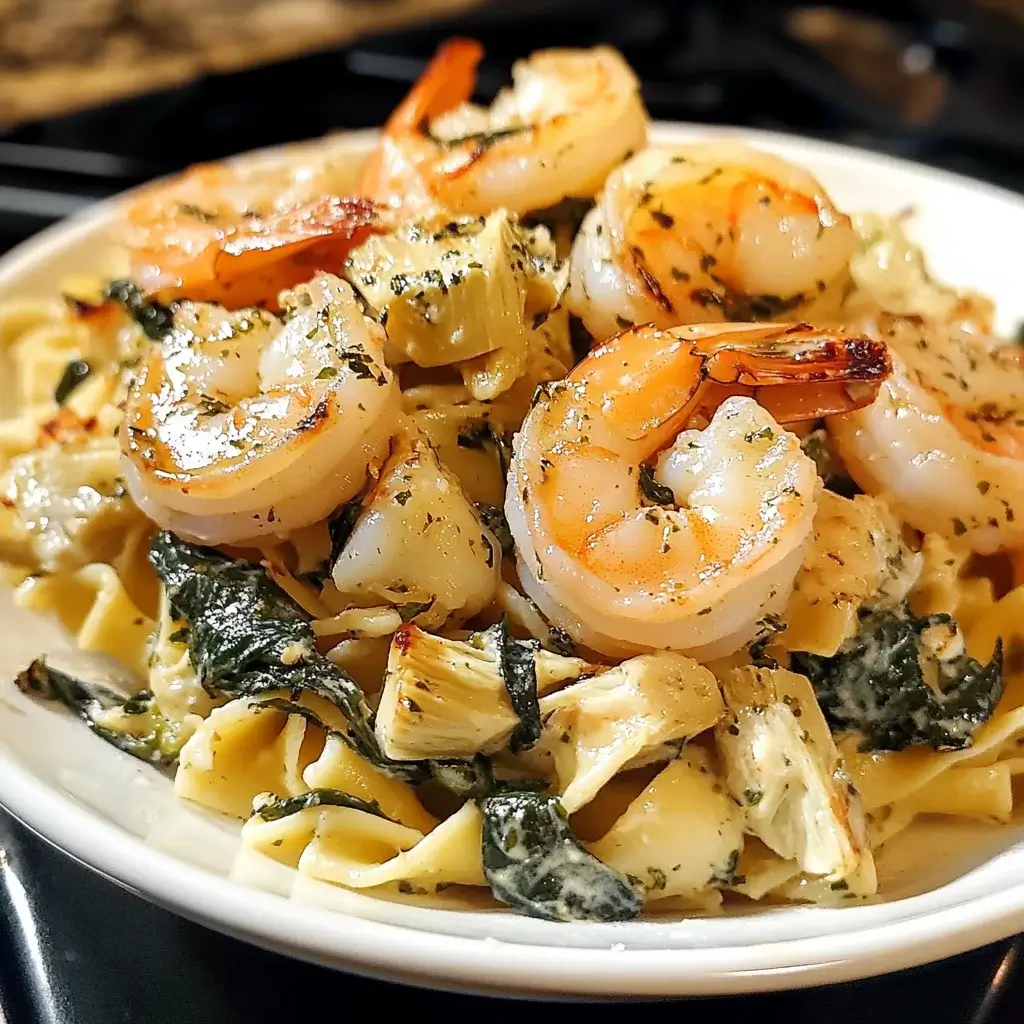
This Garlic Roasted Shrimp with Spinach Artichoke Pasta has become something of a legend in my kitchen. I first threw it together on a night when I was craving the unmistakable comfort of spinach artichoke dip but wanted something more substantial for dinner. Roasting the shrimp separately with plenty of garlic seemed like a good way to ensure they were perfectly cooked and packed with flavor, not just lost in the sauce. The result? Absolutely divine. The creamy, tangy pasta, studded with spinach and artichoke hearts, was already delicious, but the addition of those succulent, garlicky roasted shrimp took it over the top. My family devoured it, requesting it again the very next week. It’s become our go-to for a slightly indulgent weeknight meal that feels restaurant-worthy but comes together surprisingly easily. The combination of familiar comfort flavors with the perfectly cooked shrimp makes it feel both special and incredibly satisfying every single time.
Why Garlic Shrimp and Spinach Artichoke Pasta Are a Match Made in Heaven
Some flavor combinations just click, creating a synergy that elevates each component. Garlic Roasted Shrimp paired with a creamy Spinach Artichoke Pasta is one such culinary triumph. It blends the universally loved appeal of garlicky shrimp with the decadent, crowd-pleasing nature of spinach artichoke dip, all tossed with satisfying pasta. Here’s why this combination works so beautifully:
- Complementary Flavor Profiles:
- Garlic Shrimp: Offers a savory, pungent, and slightly sweet flavor profile. Garlic, especially when roasted, mellows slightly and becomes aromatic and deeply flavorful. Shrimp itself has a delicate sweetness and brininess that pairs well with bold flavors. Olive oil adds richness.
- Spinach Artichoke Sauce: This brings creamy, tangy, cheesy, and earthy notes. Cream cheese and Parmesan provide richness and salty tang. Spinach adds a mild earthiness and color. Artichoke hearts contribute a unique, slightly tangy and vegetal flavor with a tender texture. Hints of garlic and onion often form the flavor base.
- The Synergy: The robust garlic flavor of the shrimp cuts through the richness of the creamy sauce, preventing it from feeling too heavy. The shrimp’s subtle sweetness contrasts nicely with the tangy cheese and artichokes. The creaminess of the sauce envelops the shrimp and pasta, creating a cohesive and luxurious mouthfeel. Neither component completely overpowers the other; instead, they enhance each other.
- Textural Harmony and Contrast:
- Shrimp: Roasting yields shrimp that are tender, succulent, and slightly firm to the bite, avoiding the rubberiness that can plague overcooked shrimp.
- Pasta: Provides the essential chewy, substantial base, perfectly designed to hold onto the sauce. The shape (like penne, fusilli, or fettuccine) adds its own textural element.
- Sauce Components: The creaminess of the sauce is punctuated by the soft wilted spinach and the tender chunks of artichoke hearts. The melted cheese adds smoothness.
- The Blend: Each bite offers a delightful mix: the chew of the pasta, the smooth, rich sauce, the tender bites of spinach and artichoke, and the satisfying snap of perfectly cooked shrimp. This textural variety keeps the palate engaged and makes the dish incredibly satisfying to eat.
- Familiar Comfort Meets Elevated Flavor:
- Spinach artichoke dip is a beloved appetizer, instantly evoking feelings of comfort and indulgence. Translating those flavors into a pasta sauce makes it accessible and appealing.
- Garlic shrimp is a classic preparation, popular in cuisines worldwide. Roasting it adds a simple touch of elegance and ensures optimal flavor and texture.
- Combining these elements transforms a potentially simple pasta dish into something that feels special occasion-worthy, yet retains the comforting essence of its components. It’s familiar enough to be inviting but unique enough to be exciting.
- Versatility: While delicious as described, the combination is adaptable. You can adjust the cheesiness, the amount of garlic, add red pepper flakes for heat, or incorporate other vegetables. This flexibility allows home cooks to tailor it to their specific preferences.
Essentially, this dish succeeds because it takes two individually popular and delicious concepts and merges them thoughtfully. The garlic shrimp provides a savory protein punch, while the spinach artichoke pasta offers creamy, tangy comfort, resulting in a balanced, flavorful, and texturally exciting meal that appeals to a wide range of tastes.
The Superiority of Roasting: Why It’s Perfect for Shrimp
While pan-searing or boiling shrimp are common methods, roasting offers distinct advantages, particularly for incorporating into dishes like this pasta, where you want the shrimp to be perfectly cooked and flavorful in their own right.
- Even Cooking: An oven provides consistent, ambient heat that surrounds the shrimp. This promotes more even cooking compared to pan-searing, where the direct heat from the pan surface can easily overcook the exterior before the interior is done, especially if the pan is crowded. Even cooking means uniformly tender and juicy shrimp throughout.
- Hands-Off Convenience: Once the shrimp are seasoned and spread on the baking sheet, they require minimal attention. You don’t need to stand over a hot pan, flipping individual shrimp. This frees you up to focus on preparing the pasta and sauce simultaneously, making overall meal preparation more efficient.
- Flavor Concentration: Roasting, a dry-heat cooking method, helps to concentrate the natural flavors of the shrimp rather than diluting them (as boiling can). The garlic, olive oil, and any other seasonings cling to the shrimp and intensify nicely in the oven’s heat. You often get lovely little caramelized bits on the shrimp and garlic, adding depth of flavor.
- Improved Texture: When done correctly (i.e., not overcooked), roasting yields shrimp that are perfectly tender and succulent with a pleasant snap. They are less likely to become tough or rubbery compared to boiling or aggressive pan-searing, especially if dealing with larger batches.
- Better for Batches: If you’re cooking more than a handful of shrimp, roasting is far more practical than pan-searing. You can spread a large quantity in a single layer on a baking sheet (or two), ensuring they all cook evenly without crowding the pan, which is a common issue leading to steamed rather than seared shrimp on the stovetop.
- Less Oil Splatter: Compared to pan-frying or searing, roasting is a much cleaner method with minimal oil splatter, making cleanup easier.
- Attractive Appearance: Roasted shrimp often take on a beautiful pink hue with slightly browned edges, making them visually appealing when tossed into the final pasta dish.
For this Garlic Roasted Shrimp with Spinach Artichoke Pasta, roasting allows the shrimp to become flavor powerhouses – infused with garlic and cooked to perfection – ready to complement the creamy pasta without getting lost or suffering from poor texture. It’s a simple technique that yields reliably delicious results.
Gathering Your Culinary Arsenal: Ingredients List
Before you begin creating this delightful dish, gather all your ingredients. Having everything prepped and ready (mise en place) makes the cooking process much smoother and more enjoyable.
For the Garlic Roasted Shrimp:
- Large Shrimp: 1 lb (about 16-20 count), peeled and deveined, tails on or off (as preferred)
- Olive Oil: 2 tablespoons (extra virgin recommended)
- Garlic: 4-6 cloves, minced (about 1.5 – 2 tablespoons) – Use fresh garlic for the best flavor!
- Salt: ½ teaspoon (kosher or sea salt)
- Black Pepper: ¼ teaspoon, freshly ground
- Red Pepper Flakes: ¼ teaspoon (optional, for a hint of heat)
- Fresh Parsley: 1 tablespoon, finely chopped (for tossing after roasting, optional)
For the Spinach Artichoke Pasta:
- Pasta: 12 oz – Penne, fettuccine, fusilli, rotini, or linguine work well. Choose a shape that holds sauce.
- Olive Oil: 1 tablespoon
- Yellow Onion: ½ cup, finely chopped (about ½ small onion)
- Garlic: 2 cloves, minced (about 1 tablespoon)
- All-Purpose Flour: 2 tablespoons (for thickening the sauce)
- Chicken Broth or Vegetable Broth: 1 ½ cups (low sodium preferred)
- Milk: ½ cup (whole milk or 2% recommended for creaminess; half-and-half for richer sauce)
- Cream Cheese: 4 oz (½ block), softened and cut into cubes – Full-fat provides the best texture and flavor.
- Parmesan Cheese: ½ cup, freshly grated, plus more for serving – Avoid pre-shredded if possible, as it contains anti-caking agents and doesn’t melt as smoothly.
- Frozen Chopped Spinach: 10 oz package, thawed and squeezed very dry – Squeezing out excess water is crucial!
- Canned Artichoke Hearts: 1 (14 oz) can, packed in water or brine (not marinated), drained and roughly chopped
- Salt: To taste (start with ½ teaspoon, adjust after adding cheese)
- Black Pepper: To taste (start with ¼ teaspoon)
- Lemon Juice: 1 teaspoon, fresh squeezed (optional, brightens the sauce)
Ingredient Notes:
- Shrimp Size: Large shrimp (16-20 per pound) are ideal as they remain juicy during roasting. Adjust roasting time slightly for smaller or larger shrimp.
- Frozen Shrimp: If using frozen shrimp, thaw them completely in the refrigerator overnight or under cold running water. Pat them very dry before seasoning.
- Spinach: Ensure the thawed spinach is squeezed extremely dry using your hands, a potato ricer, or cheesecloth. Excess water will make the sauce thin and watery. You can substitute fresh spinach, but you’ll need a large amount (around 1 lb), wilted down separately first.
- Artichoke Hearts: Drain them well. Roughly chopping ensures you get nice pieces throughout the pasta without them being overwhelmingly large.
- Cheese: Freshly grating Parmesan makes a world of difference in meltability and flavor. Softened cream cheese incorporates more smoothly.
- Broth: Use vegetable broth to keep the dish vegetarian if omitting shrimp or serving a mixed group.
With these ingredients assembled, you’re ready to start cooking!
Crafting the Dish: Step-by-Step Instructions
This recipe involves a few simultaneous steps, but follow along, and you’ll have a delicious meal ready in no time.
1. Prepare and Roast the Shrimp:
- Preheat your oven to 400°F (200°C). Line a large baking sheet with parchment paper for easy cleanup.
- Pat the thawed (if frozen) shrimp thoroughly dry with paper towels. This helps them roast rather than steam.
- In a medium bowl, toss the dry shrimp with 2 tablespoons olive oil, 4-6 cloves minced garlic, ½ teaspoon salt, ¼ teaspoon black pepper, and optional ¼ teaspoon red pepper flakes.
- Spread the seasoned shrimp in a single layer on the prepared baking sheet. Avoid overcrowding; use two sheets if necessary.
- Roast for 6-10 minutes, depending on shrimp size. They are done when they turn pink, opaque, and curl slightly. Be careful not to overcook, as they will become rubbery.
- Once cooked, remove from the oven. If desired, toss with 1 tablespoon chopped fresh parsley. Set aside.
2. Cook the Pasta:
- While the shrimp are roasting (or just before), bring a large pot of generously salted water to a rolling boil.
- Add the pasta (12 oz) and cook according to package directions until al dente (tender but still firm to the bite).
- Crucially: Before draining, reserve about 1 cup of the starchy pasta water. This water is key to adjusting the sauce consistency later.
- Drain the pasta well and set aside. You can toss it with a tiny drizzle of olive oil to prevent sticking if it will sit for more than a minute or two.
3. Make the Spinach Artichoke Sauce:
- While the pasta is cooking, heat 1 tablespoon of olive oil in a large skillet or Dutch oven over medium heat.
- Add the chopped yellow onion (½ cup) and cook, stirring occasionally, until softened and translucent, about 4-5 minutes.
- Add the 2 cloves minced garlic and cook for another minute until fragrant, being careful not to burn it.
- Sprinkle the all-purpose flour (2 tablespoons) over the onions and garlic. Cook, stirring constantly, for 1-2 minutes to cook out the raw flour taste. This forms a roux.
- Gradually whisk in the chicken or vegetable broth (1 ½ cups), ensuring there are no lumps. Bring the mixture to a simmer, whisking occasionally.
- Reduce the heat to medium-low. Whisk in the milk (½ cup).
- Add the softened cream cheese cubes (4 oz). Whisk continuously until the cream cheese is fully melted and the sauce is smooth.
- Stir in the freshly grated Parmesan cheese (½ cup) until melted and incorporated.
- Stir in the thoroughly squeezed dry chopped spinach (10 oz package) and the drained, chopped artichoke hearts (14 oz can).
- Let the sauce simmer gently for 2-3 minutes to allow the flavors to meld and the sauce to thicken slightly.
- Taste the sauce and season with salt and pepper as needed. Remember that Parmesan and broth add saltiness, so taste before adding too much. Stir in the optional fresh lemon juice (1 teaspoon) if desired for brightness.
4. Combine and Finish:
- Add the cooked and drained pasta to the skillet with the spinach artichoke sauce. Toss well to coat the pasta completely.
- If the sauce seems too thick, add a splash of the reserved pasta water (start with ¼ cup) and stir until it reaches your desired consistency. The starchy water helps the sauce cling to the pasta beautifully.
- Gently fold in the roasted garlic shrimp. Toss just enough to combine, being careful not to break up the shrimp too much.
- Serve immediately.
Enjoy your delicious homemade Garlic Roasted Shrimp with Spinach Artichoke Pasta!
Nutritional Insights: A Quick Look
Estimating nutritional information for homemade dishes depends heavily on the specific ingredients used (brands, fat content of dairy, type of pasta, etc.). This section provides a general guideline per serving.
- Servings: This recipe typically makes 4-6 servings.
- Approximate Calories per Serving (assuming 5 servings): Around 550 – 700 calories.
General Nutritional Considerations:
- Protein: High in protein, primarily from the shrimp and cheese, with some contribution from the pasta and milk.
- Fat: Contains a significant amount of fat from the olive oil, cream cheese, Parmesan cheese, and milk/half-and-half. Choosing lower-fat dairy can reduce this, but may impact creaminess.
- Carbohydrates: Primarily from the pasta, with smaller amounts from vegetables, flour, and dairy. Fiber comes from the spinach, artichokes, and whole wheat pasta if used.
- Sodium: Can be high depending on the broth, canned artichokes, and cheeses used. Using low-sodium broth and rinsing artichokes can help manage sodium levels. Remember to taste before adding extra salt.
Disclaimer: This is an approximation. For precise nutritional details, use an online recipe calculator and input your exact ingredients and quantities. While indulgent, this dish also provides beneficial nutrients from spinach, artichokes, and shrimp. Enjoy it as part of a balanced diet.
Timing Your Meal: Prep & Cook Time
Understanding the time commitment helps you plan when to make this satisfying dish.
- Preparation Time: Approximately 20-25 minutes.
- This includes thawing shrimp (if needed, plan ahead), peeling/deveining shrimp (if not pre-prepped), chopping onion, mincing garlic, grating cheese, chopping artichokes, squeezing spinach dry, and measuring ingredients. Mise en place is key here.
- Cooking Time: Approximately 25-30 minutes.
- Roasting Shrimp: 6-10 minutes.
- Cooking Pasta: 10-12 minutes (concurrent with sauce/shrimp).
- Making Sauce & Combining: 15-20 minutes.
- Much of this time involves concurrent cooking (e.g., pasta boiling while sauce simmers and shrimp roasts).
- Total Estimated Time: Approximately 45 – 55 minutes from starting prep to serving.
This makes it a feasible option for a weeknight dinner if you’re organized, but it feels special enough for a weekend meal too.
Presentation Perfection: How to Serve
Serving this dish thoughtfully can enhance the dining experience. Here are some ideas:
- Individual Bowls: Serve generously portioned amounts in wide, shallow pasta bowls. This showcases the pasta, shrimp, and sauce components nicely.
- Garnishes: Elevate the visual appeal and add fresh flavor with:
- Fresh Parsley: A sprinkle of finely chopped fresh flat-leaf parsley adds color and freshness.
- Extra Parmesan: Offer freshly grated Parmesan cheese at the table for diners to add to their liking.
- Red Pepper Flakes: A pinch on top adds visual interest and caters to those who like extra heat.
- Lemon Wedges: A small wedge of fresh lemon on the side allows diners to add a bright squeeze just before eating.
- Toasted Breadcrumbs: A sprinkle of garlic-herb toasted panko breadcrumbs can add a delightful crunch.
- Family Style: Transfer the finished pasta to a large serving platter or bowl. Arrange some of the shrimp visibly on top for better presentation. Garnish generously before bringing it to the table.
- Accompaniments: Keep sides simple as the pasta is quite rich:
- Simple Green Salad: A light salad with a vinaigrette dressing provides a refreshing contrast.
- Crusty Bread: Perfect for soaking up any leftover delicious sauce. Garlic bread is also a great (though indulgent) option.
- Steamed Vegetables: Simple steamed asparagus or broccoli can add extra greens without competing with the main dish.
- Wine Pairing Suggestions:
- White Wine: A crisp, dry white wine like Pinot Grigio, Sauvignon Blanc, or an unoaked Chardonnay pairs well, cutting through the richness of the sauce.
- Light Red Wine: A very light-bodied red like Gamay could work if you prefer red wine.
Serving immediately is key to enjoying the pasta and shrimp at their best temperatures and the sauce at its ideal consistency.
Elevate Your Dish: Additional Tips (5 Tips)
Take your Garlic Roasted Shrimp with Spinach Artichoke Pasta from great to absolutely outstanding with these pro tips:
- Don’t Overcook the Shrimp: This is the cardinal sin of shrimp cookery! Shrimp cook very quickly. Roast them only until they are just pink, opaque, and starting to curl. Remember they will continue to cook slightly from residual heat and when added to the hot pasta. Overcooked shrimp become tough and rubbery, detracting significantly from the dish. Watch them closely in the oven.
- Reserve That Starchy Pasta Water: Seriously, don’t forget this step! The cloudy water left after boiling pasta is full of starch and salt. Adding splashes of this reserved water to your sauce does wonders. It helps to emulsify the sauce (making it creamier), allows it to cling better to the pasta strands, and lets you adjust the consistency perfectly without diluting the flavor as plain water would. Always reserve more than you think you’ll need (at least 1 cup).
- Squeeze Spinach THOROUGHLY: Excess water is the enemy of a creamy, flavorful sauce. Frozen spinach holds a surprising amount of liquid. Squeeze it out relentlessly using your hands, a clean kitchen towel, cheesecloth, or even a potato ricer. Getting it as dry as possible ensures your sauce remains rich and flavorful, not watery and bland.
- Use Fresh Garlic and Lemon: While garlic powder or bottled lemon juice can work in a pinch, fresh ingredients make a significant difference here. Freshly minced garlic provides a brighter, more pungent flavor for both the shrimp and the sauce base. A squeeze of fresh lemon juice at the end cuts through the richness of the cream cheese and Parmesan, brightening the entire dish in a way bottled juice can’t replicate.
- Build Flavor Layers in the Sauce: Don’t rush the sauce-making process. Sauté the onions until truly softened to bring out their sweetness. Cook the garlic until fragrant but not burnt. Toasting the flour briefly in the fat (the roux step) cooks out its raw taste and provides better thickening. Allowing the cheeses to melt fully and the sauce to simmer gently lets the flavors meld properly before adding the pasta and shrimp. Each step contributes to the final depth of flavor.
Mastering these small details will significantly impact the final quality and deliciousness of your pasta dish.
Your Questions Answered: FAQ
Here are answers to some frequently asked questions about making Garlic Roasted Shrimp with Spinach Artichoke Pasta:
- Q: Can I use pre-cooked shrimp?
- A: While you technically can, it’s not recommended for the best flavor and texture. Pre-cooked shrimp often become overcooked and rubbery when reheated. Roasting raw shrimp allows you to infuse them with garlic flavor and cook them perfectly just before adding them to the pasta. If you must use pre-cooked, add them at the very end just to heat through (1-2 minutes), and skip the roasting step (you’ll miss the roasted garlic flavor).
- Q: Can I make this dish gluten-free?
- A: Yes, easily! Use your favorite gluten-free pasta blend; cook according to its specific package directions. To thicken the sauce, substitute the all-purpose flour with a gluten-free all-purpose blend or use a cornstarch slurry (mix 1-2 tablespoons cornstarch with an equal amount of cold broth or water, then whisk into the simmering sauce). Ensure your broth is certified gluten-free.
- Q: How can I make a lighter version of this pasta?
- A: To reduce fat and calories: Use Neufchâtel cheese (reduced-fat cream cheese) instead of full-fat. Opt for 2% milk instead of whole milk or half-and-half. Reduce the amount of Parmesan cheese slightly. Use olive oil spray instead of liquid olive oil for roasting shrimp (though flavor might be slightly impacted). You can also increase the ratio of spinach and artichokes to pasta.
- Q: Can I make this ahead of time or store leftovers?
- A: This dish is best enjoyed freshly made, as the sauce can thicken considerably upon cooling and reheating, and the shrimp texture is optimal when fresh. However, you can store leftovers in an airtight container in the refrigerator for up to 2-3 days. To reheat, gently warm on the stovetop over low heat, adding a splash of milk or broth to loosen the sauce as needed. Avoid high heat or microwaving for long periods, which can make the shrimp tough. Making components ahead (like chopping veggies or making the sauce base before adding dairy/cheese) can save time on cooking day.
- Q: What if I don’t like artichokes?
- A: If artichokes aren’t your favorite, you can simply omit them. To add bulk and flavor, consider substituting with other vegetables like sautéed mushrooms, roasted red peppers (jarred, drained, and chopped), sun-dried tomatoes (oil-packed, drained, and chopped), or steamed asparagus pieces added towards the end. The base spinach-cheese sauce is delicious even without the artichokes.
Making It Your Own: Variations & Substitutions
This recipe is a fantastic base for customization. Feel free to experiment and make it your own!
- Protein Swaps:
- Chicken: Substitute 1 lb of boneless, skinless chicken breast, cut into bite-sized pieces. Sauté the chicken before or after the onions/garlic, or use roasted chicken.
- Scallops: Use large sea scallops instead of shrimp. Sear them separately and add at the end.
- Vegetarian: Simply omit the shrimp for a delicious vegetarian main course. Add sautéed mushrooms or white beans for extra substance.
- Vegetable Additions:
- Mushrooms: Sauté sliced cremini or button mushrooms along with the onions.
- Sun-Dried Tomatoes: Add ¼ cup of chopped oil-packed sun-dried tomatoes for a tangy, chewy element.
- Roasted Red Peppers: Stir in ½ cup of chopped roasted red peppers (from a jar, drained) for sweetness and color.
- Peas: Add ½ cup of frozen peas during the last few minutes of sauce simmering.
- Cheese Variations:
- Creamier Sauce: Increase cream cheese slightly or use half-and-half instead of milk.
- Different Cheeses: Swap some of the Parmesan for Gruyère, Fontina, or Mozzarella for different melt characteristics and flavor profiles. A dollop of ricotta added with the cream cheese can also enhance creaminess.
- Spice Level:
- Increase the red pepper flakes for more heat.
- Add a pinch of cayenne pepper to the sauce.
- Sauté a minced jalapeño along with the onion.
- Sauce Flavor Enhancers:
- A splash of dry white wine (like Pinot Grigio) added after cooking the garlic (before the flour/broth) can add depth. Let it simmer for a minute to cook off the alcohol.
- A dash of nutmeg complements creamy sauces and spinach beautifully.
- Use flavored olive oil (like garlic-infused) for an extra layer of flavor.
- Pasta Shapes: Experiment with different pasta shapes. Shells or orecchiette are great at catching the sauce and small bits of spinach/artichoke. Long pastas like fettuccine or linguine also work well.
Don’t be afraid to play with the ingredients based on your preferences and what you have on hand. The core combination is forgiving and versatile.
From Kitchen to Table: The Joy of a Delicious Meal
There’s a special kind of satisfaction that comes from creating a meal that hits all the right notes – comforting yet slightly sophisticated, familiar yet exciting, and undeniably delicious. This Garlic Roasted Shrimp with Spinach Artichoke Pasta embodies that feeling. It takes the crowd-pleasing allure of creamy, cheesy spinach artichoke goodness and elevates it with perfectly roasted, succulent garlic shrimp, all brought together with perfectly cooked pasta.
It’s a dish that feels like an indulgence but is achievable even on a busy weeknight with a little planning. The process, from roasting the fragrant shrimp to simmering the creamy sauce and finally tossing everything together, is a rewarding culinary journey. The end result is a restaurant-quality meal made right in your own kitchen, ready to be shared and savored.
Whether you’re cooking for family, entertaining friends, or simply treating yourself, this recipe promises warmth, comfort, and pure flavor satisfaction. We hope this detailed guide empowers you to create this wonderful dish and that it brings as much joy to your table as it does to ours. Enjoy every creamy, garlicky, shrimpy bite!
Print
Garlic Roasted Shrimp with Spinach Artichoke Pasta recipe
Ingredients
-
- Large Shrimp: 1 lb (about 16-20 count), peeled and deveined, tails on or off (as preferred)
-
- Olive Oil: 2 tablespoons (extra virgin recommended)
-
- Garlic: 4-6 cloves, minced (about 1.5 – 2 tablespoons) – Use fresh garlic for the best flavor!
-
- Salt: ½ teaspoon (kosher or sea salt)
-
- Black Pepper: ¼ teaspoon, freshly ground
-
- Red Pepper Flakes: ¼ teaspoon (optional, for a hint of heat)
-
- Fresh Parsley: 1 tablespoon, finely chopped (for tossing after roasting, optional)
For the Spinach Artichoke Pasta:
-
- Pasta: 12 oz – Penne, fettuccine, fusilli, rotini, or linguine work well. Choose a shape that holds sauce.
-
- Olive Oil: 1 tablespoon
-
- Yellow Onion: ½ cup, finely chopped (about ½ small onion)
-
- Garlic: 2 cloves, minced (about 1 tablespoon)
-
- All-Purpose Flour: 2 tablespoons (for thickening the sauce)
-
- Chicken Broth or Vegetable Broth: 1 ½ cups (low sodium preferred)
-
- Milk: ½ cup (whole milk or 2% recommended for creaminess; half-and-half for richer sauce)
-
- Cream Cheese: 4 oz (½ block), softened and cut into cubes – Full-fat provides the best texture and flavor.
-
- Parmesan Cheese: ½ cup, freshly grated, plus more for serving – Avoid pre-shredded if possible, as it contains anti-caking agents and doesn’t melt as smoothly.
-
- Frozen Chopped Spinach: 10 oz package, thawed and squeezed very dry – Squeezing out excess water is crucial!
-
- Canned Artichoke Hearts: 1 (14 oz) can, packed in water or brine (not marinated), drained and roughly chopped
-
- Salt: To taste (start with ½ teaspoon, adjust after adding cheese)
-
- Black Pepper: To taste (start with ¼ teaspoon)
-
- Lemon Juice: 1 teaspoon, fresh squeezed (optional, brightens the sauce)
Ingredient Notes:
-
- Shrimp Size: Large shrimp (16-20 per pound) are ideal as they remain juicy during roasting. Adjust roasting time slightly for smaller or larger shrimp.
-
- Frozen Shrimp: If using frozen shrimp, thaw them completely in the refrigerator overnight or under cold running water. Pat them very dry before seasoning.
-
- Spinach: Ensure the thawed spinach is squeezed extremely dry using your hands, a potato ricer, or cheesecloth. Excess water will make the sauce thin and watery. You can substitute fresh spinach, but you’ll need a large amount (around 1 lb), wilted down separately first.
-
- Artichoke Hearts: Drain them well. Roughly chopping ensures you get nice pieces throughout the pasta without them being overwhelmingly large.
-
- Cheese: Freshly grating Parmesan makes a world of difference in meltability and flavor. Softened cream cheese incorporates more smoothly.
-
- Broth: Use vegetable broth to keep the dish vegetarian if omitting shrimp or serving a mixed group.
Instructions
1. Prepare and Roast the Shrimp:
-
- Preheat your oven to 400°F (200°C). Line a large baking sheet with parchment paper for easy cleanup.
-
- Pat the thawed (if frozen) shrimp thoroughly dry with paper towels. This helps them roast rather than steam.
-
- In a medium bowl, toss the dry shrimp with 2 tablespoons olive oil, 4-6 cloves minced garlic, ½ teaspoon salt, ¼ teaspoon black pepper, and optional ¼ teaspoon red pepper flakes.
-
- Spread the seasoned shrimp in a single layer on the prepared baking sheet. Avoid overcrowding; use two sheets if necessary.
-
- Roast for 6-10 minutes, depending on shrimp size. They are done when they turn pink, opaque, and curl slightly. Be careful not to overcook, as they will become rubbery.
-
- Once cooked, remove from the oven. If desired, toss with 1 tablespoon chopped fresh parsley. Set aside.
2. Cook the Pasta:
-
- While the shrimp are roasting (or just before), bring a large pot of generously salted water to a rolling boil.
-
- Add the pasta (12 oz) and cook according to package directions until al dente (tender but still firm to the bite).
-
- Crucially: Before draining, reserve about 1 cup of the starchy pasta water. This water is key to adjusting the sauce consistency later.
-
- Drain the pasta well and set aside. You can toss it with a tiny drizzle of olive oil to prevent sticking if it will sit for more than a minute or two.
3. Make the Spinach Artichoke Sauce:
-
- While the pasta is cooking, heat 1 tablespoon of olive oil in a large skillet or Dutch oven over medium heat.
-
- Add the chopped yellow onion (½ cup) and cook, stirring occasionally, until softened and translucent, about 4-5 minutes.
-
- Add the 2 cloves minced garlic and cook for another minute until fragrant, being careful not to burn it.
-
- Sprinkle the all-purpose flour (2 tablespoons) over the onions and garlic. Cook, stirring constantly, for 1-2 minutes to cook out the raw flour taste. This forms a roux.
-
- Gradually whisk in the chicken or vegetable broth (1 ½ cups), ensuring there are no lumps. Bring the mixture to a simmer, whisking occasionally.
-
- Reduce the heat to medium-low. Whisk in the milk (½ cup).
-
- Add the softened cream cheese cubes (4 oz). Whisk continuously until the cream cheese is fully melted and the sauce is smooth.
-
- Stir in the freshly grated Parmesan cheese (½ cup) until melted and incorporated.
-
- Stir in the thoroughly squeezed dry chopped spinach (10 oz package) and the drained, chopped artichoke hearts (14 oz can).
-
- Let the sauce simmer gently for 2-3 minutes to allow the flavors to meld and the sauce to thicken slightly.
-
- Taste the sauce and season with salt and pepper as needed. Remember that Parmesan and broth add saltiness, so taste before adding too much. Stir in the optional fresh lemon juice (1 teaspoon) if desired for brightness.
4. Combine and Finish:
-
- Add the cooked and drained pasta to the skillet with the spinach artichoke sauce. Toss well to coat the pasta completely.
-
- If the sauce seems too thick, add a splash of the reserved pasta water (start with ¼ cup) and stir until it reaches your desired consistency. The starchy water helps the sauce cling to the pasta beautifully.
-
- Gently fold in the roasted garlic shrimp. Toss just enough to combine, being careful not to break up the shrimp too much.
-
- Serve immediately.
Nutrition
- Serving Size: one normal portion
- Calories: 550 – 700