
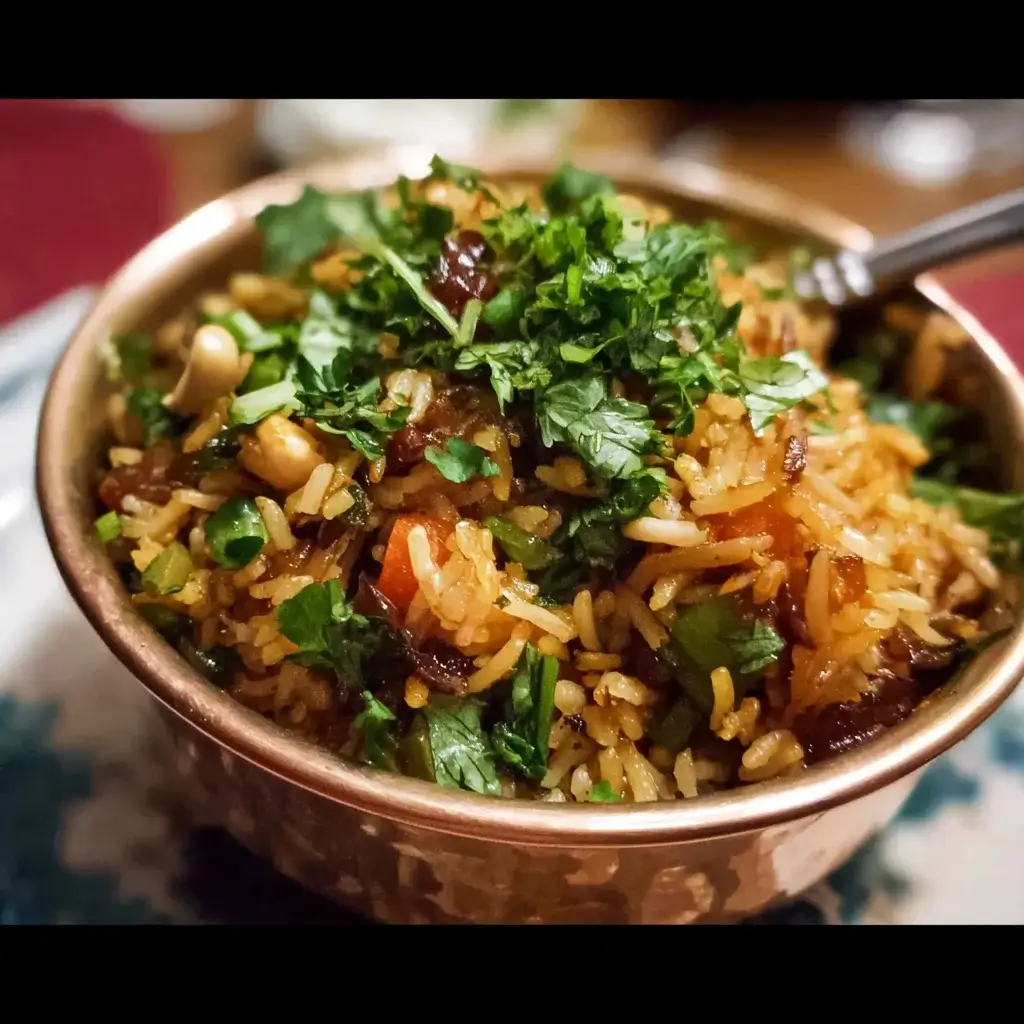
There are certain dishes that are more than just food; they are edible art. The first time I saw a platter of Jeweled Rice, I was completely captivated. It wasn’t just a side dish; it was a centerpiece, a stunning mosaic of color and texture that promised a story in every spoonful. The rice, tinged with the golden blush of saffron, was mounded high and lavishly adorned with what looked like scattered gems: the ruby-red of pomegranate and barberries, the emerald-green of pistachios, the amber of dried apricots, and the glittering gold of slivered almonds and candied orange peel. It seemed impossibly complex, a dish reserved for the most skilled chefs. When I finally decided to tackle it myself, I discovered its beautiful secret: while it requires care and attention to detail, its creation is a joyful, meditative process. The act of toasting the nuts, plumping the fruits, and gently folding them into the fragrant rice felt like crafting a masterpiece. Serving it to my family, and seeing their awe at the sheer beauty before them, was one of my proudest kitchen moments. This Jeweled Vegetarian Rice Plov is now my go-to for any celebration, proving that a vegetarian dish can be the undisputed, most breathtaking star of any feast.
A Culinary Crown Jewel: What is Jeweled Rice Plov?
Jeweled Rice, known in its Persian homeland as Javaher Polow, is one of the most festive and visually stunning dishes in a cuisine renowned for its elegance and complexity. The name itself translates to “jeweled pilaf,” a perfectly poetic description for this culinary treasure. It is traditionally served at celebratory occasions, most notably weddings, where it symbolizes a sweet, rich, and beautiful future for the couple. While it shares its basic cooking method with other pilafs or “plovs”—a technique where rice is cooked in a seasoned broth in one pot—the Javaher Polow is set apart by its magnificent and elaborate garnish.
The “jewels” are a carefully curated combination of nuts, dried fruits, and candied citrus peels, each chosen for its unique color, texture, and flavor. These are not merely mixed into the rice but are prepared separately and then artfully scattered over the top just before serving, creating a breathtaking presentation. The foundation of the dish is long-grain basmati rice, prized for its delicate aroma and its ability to cook up into light, fluffy, individual grains. This rice is often perfumed with saffron, which imparts a subtle floral aroma and a beautiful golden hue. The flavor profile is a masterful balancing act: the sweetness of golden raisins and apricots is countered by the tart, zesty pop of barberries (zereshk); the rich, buttery flavor of toasted almonds and pistachios provides a savory crunch; and the fragrant, slightly bitter notes of candied orange peel add a sophisticated citrusy dimension. This isn’t just a meal; it’s a multi-sensory experience and a true labor of love.
Assembling Your Treasures: The Ingredients List
The magic of this dish lies in the quality and variety of its components. Think of yourself as a jeweler, gathering the precious gems that will adorn your masterpiece.
For the Aromatic Rice Foundation:
- Long-Grain Basmati Rice (2 cups): The star of the show. Choose a high-quality, aged basmati for the best results in terms of length and fragrance.
- Vegetable Broth or Water (3 ½ cups): A flavorful vegetable broth adds more depth, but water works perfectly fine.
- Ghee or Unsalted Butter (4 tablespoons): Ghee (clarified butter) is traditional and imparts a wonderful nutty flavor that can withstand higher heat without burning. Butter is a great substitute. You can also use a neutral oil for a vegan version.
- Large Yellow Onion (1): Finely chopped. This will melt into the rice, creating a sweet and savory base.
- Whole Spices:
- Cinnamon Stick (1, about 2 inches long)
- Green Cardamom Pods (4-5, lightly crushed to release their seeds)
- Salt (1 ½ teaspoons, or to taste): Essential for bringing out all the flavors.
- Saffron Threads (a generous pinch, about ½ teaspoon): The soul of the dish’s aroma and color.
For the Precious “Jewels” (The Toppings):
- Slivered Almonds (½ cup): For a delicate, buttery crunch.
- Shelled Pistachios (½ cup): Roughly chopped. Their vibrant green is essential for the jeweled look.
- Dried Apricots (½ cup): Finely diced. They provide a sweet, chewy, amber-colored element.
- Golden Raisins (⅓ cup): For little bursts of sweetness.
- Dried Barberries (Zereshk) (⅓ cup): This is a key traditional ingredient. Their tartness is the perfect counterpoint to the sweet fruits. (See FAQ for sourcing and substitutes).
- Candied Orange Peel (¼ cup): Finely chopped. Adds a beautiful, fragrant citrus note. You can buy this or make your own.
- Pomegranate Seeds (Arils) (½ cup, for garnish): For a final, fresh, ruby-red sparkle and juicy pop.
- Sugar (2 tablespoons): To caramelize the carrots and balance the tartness of the barberries.
- Carrots (2 medium): Peeled and cut into very fine matchsticks (julienned).
The Art of Crafting Your Plov: Step-by-Step Instructions
This recipe is a process of building layers of flavor and texture. Follow these steps methodically for a stunning result.
Part 1: The Crucial Rice Preparation
- Wash and Soak the Rice: Place the basmati rice in a large bowl. Cover with cold water, swirl with your hands, and carefully pour off the milky water. Repeat this process 4-5 times until the water runs mostly clear. This removes excess starch and is the absolute key to fluffy, non-sticky rice.
- Soak: Once washed, cover the rice with fresh cold water and let it soak for at least 30 minutes, or up to an hour. This helps the grains hydrate evenly and elongate beautifully during cooking. Drain it well in a fine-mesh sieve just before you are ready to use it.
Part 2: Preparing the Jewels
- Toast the Nuts: In a dry skillet over medium-low heat, toast the slivered almonds until they are fragrant and lightly golden, about 3-4 minutes. Remove them from the skillet. Do the same with the chopped pistachios, being careful not to burn them. Set the toasted nuts aside.
- Sauté the Carrots: In the same skillet, melt 1 tablespoon of the ghee or butter over medium heat. Add the julienned carrots and 1 tablespoon of the sugar. Sauté for 5-7 minutes until the carrots are tender and slightly caramelized. Remove from the skillet and set aside.
- Prepare the Barberries: Rinse the dried barberries in a sieve to remove any grit. In the same skillet, melt another tablespoon of ghee or butter over low heat. Add the rinsed barberries and the remaining 1 tablespoon of sugar. Sauté for just 1-2 minutes until they plump up and turn a vibrant red. Be very careful, as they burn quickly. Remove and set aside.
- Plump the Fruits: You can briefly soak the diced apricots and golden raisins in a little warm water for 10 minutes to make them extra plump and juicy. Drain well before using.
Part 3: Cooking the Plov
- Bloom the Saffron: In a small bowl, crumble the saffron threads between your fingers. Pour ¼ cup of hot (not boiling) water or vegetable broth over them. Let this steep while you prepare the rice; it will release its color and potent aroma.
- Sauté the Base: In a large, heavy-bottomed pot or Dutch oven with a tight-fitting lid, melt the remaining 2 tablespoons of ghee or butter over medium heat. Add the finely chopped onion and cook, stirring occasionally, for 8-10 minutes, until it is soft, translucent, and just beginning to turn golden.
- Toast the Spices and Rice: Add the cinnamon stick and crushed cardamom pods to the pot and stir for 30 seconds until fragrant. Add the drained, soaked rice to the pot. Gently stir the rice for 2-3 minutes to toast it lightly and coat each grain in the flavored fat.
- Add Liquid and Cook: Pour in the 3 ½ cups of vegetable broth (or water) and the salt. Stir once. Bring the liquid to a rolling boil.
- Simmer: As soon as it boils, immediately reduce the heat to the absolute lowest setting. Drizzle half of the bloomed saffron water over the rice. Cover the pot with a tight-fitting lid. Let the rice simmer undisturbed for 15 minutes. Do not lift the lid during this time.
- The Final Steam: After 15 minutes, turn off the heat. Remove the lid. Quickly place a clean kitchen towel or a double layer of paper towels over the pot opening (this absorbs condensation and ensures maximum fluffiness) and place the lid back on tightly over the towel. Let the rice steam, off the heat, for another 10-15 minutes.
Part 4: The Grand Assembly
- Fluff the Rice: Remove the lid and the towel. The rice should be perfectly cooked and fluffy. Gently fluff it with a fork, being careful not to break the long grains. Remove the cinnamon stick and cardamom pods if you can find them.
- Serve: Transfer the fluffed rice to a large, wide serving platter, mounding it gently. Now, begin to decorate. Artfully scatter the toasted nuts, caramelized carrots, plumped fruits, glistening barberries, and candied orange peel all over the rice.
- Garnish: For the final touch of brilliance, sprinkle the fresh pomegranate arils over the top. Serve immediately and watch your guests marvel at your creation.
The Vitals: Nutrition and Timing
This dish is a project of love, but the timing is very manageable.
Preparation Time Breakdown
- Soaking Time: 30-60 minutes
- Active Preparation Time: 25 minutes (chopping, preparing jewels)
- Cooking Time: 35-40 minutes (including steaming)
- Total Time: Approximately 1 hour 40 minutes (including soaking)
Nutrition Facts
- Servings: 6-8 (as a generous side dish)
- Calories per serving (approximate): 450-550 kcal
This dish is a source of complex carbohydrates, fiber from the fruits, and healthy fats and protein from the nuts. While it is a celebratory dish, it is made with wholesome, natural ingredients.
How to Serve Your Masterpiece
The presentation of this dish is almost as important as its taste. Serve it in a way that honors its beauty.
- As a Majestic Centerpiece:
- Mound the rice high on a large, preferably round or oval, platter.
- Garnish lavishly with the “jewels,” creating a beautiful contrast of colors and textures. Some people like to create patterns or stripes with the different toppings.
- Let the dish be the star of the table, allowing everyone to serve themselves from the main platter.
- With Perfect Companions:
- A cooling yogurt side is the most traditional and perfect accompaniment. Serve with a bowl of plain, thick Greek yogurt or a simple raita (yogurt mixed with grated cucumber and a pinch of mint).
- As a vegetarian main course, it is incredibly satisfying on its own with the yogurt side.
- As part of a larger feast, it pairs beautifully with other dishes like:
- Roasted vegetables, such as saffron-roasted cauliflower or honey-glazed carrots.
- A simple lentil stew (dal).
- Grilled halloumi cheese skewers.
5 Pro-Tips for a Flawless Plov
- Respect the Rice: The success of this dish lives and dies with the rice. Do not skip the washing and soaking steps. Washing removes the surface starch that causes stickiness, and soaking ensures each grain cooks evenly and grows to its maximum length, resulting in that coveted fluffy texture.
- Bloom Your Saffron Properly: Never just toss saffron threads directly into the pot. To extract their maximum color and heavenly aroma, crumble them and steep them in a small amount of warm (not boiling) liquid for at least 15 minutes. This small step makes a huge difference.
- Embrace the Towel Trick: Placing a clean kitchen towel between the pot and the lid during the final steaming phase is a classic Persian technique. It absorbs all the steam and condensation that would otherwise drip back down onto the rice, preventing it from becoming soggy and guaranteeing exceptionally light and fluffy grains.
- Don’t Overcook the Jewels: Each topping requires a delicate touch. The barberries, in particular, can go from perfectly plump to burnt and bitter in a matter of seconds. Keep a close eye on them and use low heat. Toast the nuts gently until just fragrant to bring out their oils without scorching them.
- Balance is Key: The genius of this dish is its balance of sweet, tart, savory, and aromatic flavors. The tartness of the barberries is essential to cut through the sweetness of the raisins, apricots, and carrots. If you can’t find barberries, make sure to use a tart substitute (see FAQ) to maintain this crucial flavor harmony.
Frequently Asked Questions (FAQ)
1. What are barberries (zereshk), and can I substitute them?
Barberries are small, dried, red berries with a vibrant, sharp, and tart flavor. They are a staple in Persian cuisine and are essential for the authentic taste of Jeweled Rice. You can find them in Middle Eastern or specialty food stores, or online. If you absolutely cannot find them, the best substitute would be dried, unsweetened cranberries, chopped finely, as they provide a similar tartness and color.
2. Can I make this dish nut-free?
Yes. To make it nut-free, simply omit the almonds and pistachios. You can replace the crunch and savory element by toasting sunflower seeds or pumpkin seeds (pepitas) instead.
3. What is the difference between Plov (Pilaf) and Biryani?
While both are elaborate rice dishes, the core difference lies in the cooking method. In a Plov/Pilaf, the raw rice is sautéed with aromatics and then cooked by absorbing a measured amount of liquid in one pot. In a Biryani, the rice and the main flavoring component (meat or vegetable masala) are cooked separately and then layered together before a final steaming (dum) process.
4. Can I prepare this Jeweled Rice ahead of time?
You can do much of the prep work ahead. The “jewels”—the toasted nuts, sautéed carrots, and prepared fruits—can all be made a day in advance and stored in separate airtight containers at room temperature. You can then cook the rice fresh just before serving for the best texture. The fully assembled dish is best enjoyed fresh, but leftovers can be gently reheated in a microwave or on the stovetop with a splash of water.
5. How do I prevent my rice from becoming sticky or mushy?
The three golden rules for fluffy rice are: 1) Wash the rice thoroughly to remove excess starch. 2) Soak the rice for at least 30 minutes. 3) Use the right ratio of liquid to rice (typically around 1.75 parts liquid to 1 part rice for the absorption method) and do not lift the lid while it is simmering. The final steam with a towel under the lid is the final insurance policy for perfection.
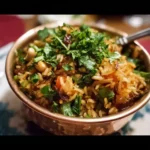
Jeweled Vegetarian Rice Plov recipe
Ingredients
For the Aromatic Rice Foundation:
-
Long-Grain Basmati Rice (2 cups): The star of the show. Choose a high-quality, aged basmati for the best results in terms of length and fragrance.
-
Vegetable Broth or Water (3 ½ cups): A flavorful vegetable broth adds more depth, but water works perfectly fine.
-
Ghee or Unsalted Butter (4 tablespoons): Ghee (clarified butter) is traditional and imparts a wonderful nutty flavor that can withstand higher heat without burning. Butter is a great substitute. You can also use a neutral oil for a vegan version.
-
Large Yellow Onion (1): Finely chopped. This will melt into the rice, creating a sweet and savory base.
-
Whole Spices:
-
Cinnamon Stick (1, about 2 inches long)
-
Green Cardamom Pods (4-5, lightly crushed to release their seeds)
-
-
Salt (1 ½ teaspoons, or to taste): Essential for bringing out all the flavors.
-
Saffron Threads (a generous pinch, about ½ teaspoon): The soul of the dish’s aroma and color.
For the Precious “Jewels” (The Toppings):
-
Slivered Almonds (½ cup): For a delicate, buttery crunch.
-
Shelled Pistachios (½ cup): Roughly chopped. Their vibrant green is essential for the jeweled look.
-
Dried Apricots (½ cup): Finely diced. They provide a sweet, chewy, amber-colored element.
-
Golden Raisins (⅓ cup): For little bursts of sweetness.
-
Dried Barberries (Zereshk) (⅓ cup): This is a key traditional ingredient. Their tartness is the perfect counterpoint to the sweet fruits. (See FAQ for sourcing and substitutes).
-
Candied Orange Peel (¼ cup): Finely chopped. Adds a beautiful, fragrant citrus note. You can buy this or make your own.
-
Pomegranate Seeds (Arils) (½ cup, for garnish): For a final, fresh, ruby-red sparkle and juicy pop.
-
Sugar (2 tablespoons): To caramelize the carrots and balance the tartness of the barberries.
-
Carrots (2 medium): Peeled and cut into very fine matchsticks (julienned).
Instructions
Part 1: The Crucial Rice Preparation
-
Wash and Soak the Rice: Place the basmati rice in a large bowl. Cover with cold water, swirl with your hands, and carefully pour off the milky water. Repeat this process 4-5 times until the water runs mostly clear. This removes excess starch and is the absolute key to fluffy, non-sticky rice.
-
Soak: Once washed, cover the rice with fresh cold water and let it soak for at least 30 minutes, or up to an hour. This helps the grains hydrate evenly and elongate beautifully during cooking. Drain it well in a fine-mesh sieve just before you are ready to use it.
Part 2: Preparing the Jewels
-
Toast the Nuts: In a dry skillet over medium-low heat, toast the slivered almonds until they are fragrant and lightly golden, about 3-4 minutes. Remove them from the skillet. Do the same with the chopped pistachios, being careful not to burn them. Set the toasted nuts aside.
-
Sauté the Carrots: In the same skillet, melt 1 tablespoon of the ghee or butter over medium heat. Add the julienned carrots and 1 tablespoon of the sugar. Sauté for 5-7 minutes until the carrots are tender and slightly caramelized. Remove from the skillet and set aside.
-
Prepare the Barberries: Rinse the dried barberries in a sieve to remove any grit. In the same skillet, melt another tablespoon of ghee or butter over low heat. Add the rinsed barberries and the remaining 1 tablespoon of sugar. Sauté for just 1-2 minutes until they plump up and turn a vibrant red. Be very careful, as they burn quickly. Remove and set aside.
-
Plump the Fruits: You can briefly soak the diced apricots and golden raisins in a little warm water for 10 minutes to make them extra plump and juicy. Drain well before using.
Part 3: Cooking the Plov
-
Bloom the Saffron: In a small bowl, crumble the saffron threads between your fingers. Pour ¼ cup of hot (not boiling) water or vegetable broth over them. Let this steep while you prepare the rice; it will release its color and potent aroma.
-
Sauté the Base: In a large, heavy-bottomed pot or Dutch oven with a tight-fitting lid, melt the remaining 2 tablespoons of ghee or butter over medium heat. Add the finely chopped onion and cook, stirring occasionally, for 8-10 minutes, until it is soft, translucent, and just beginning to turn golden.
-
Toast the Spices and Rice: Add the cinnamon stick and crushed cardamom pods to the pot and stir for 30 seconds until fragrant. Add the drained, soaked rice to the pot. Gently stir the rice for 2-3 minutes to toast it lightly and coat each grain in the flavored fat.
-
Add Liquid and Cook: Pour in the 3 ½ cups of vegetable broth (or water) and the salt. Stir once. Bring the liquid to a rolling boil.
-
Simmer: As soon as it boils, immediately reduce the heat to the absolute lowest setting. Drizzle half of the bloomed saffron water over the rice. Cover the pot with a tight-fitting lid. Let the rice simmer undisturbed for 15 minutes. Do not lift the lid during this time.
-
The Final Steam: After 15 minutes, turn off the heat. Remove the lid. Quickly place a clean kitchen towel or a double layer of paper towels over the pot opening (this absorbs condensation and ensures maximum fluffiness) and place the lid back on tightly over the towel. Let the rice steam, off the heat, for another 10-15 minutes.
Part 4: The Grand Assembly
-
Fluff the Rice: Remove the lid and the towel. The rice should be perfectly cooked and fluffy. Gently fluff it with a fork, being careful not to break the long grains. Remove the cinnamon stick and cardamom pods if you can find them.
-
Serve: Transfer the fluffed rice to a large, wide serving platter, mounding it gently. Now, begin to decorate. Artfully scatter the toasted nuts, caramelized carrots, plumped fruits, glistening barberries, and candied orange peel all over the rice.
-
Garnish: For the final touch of brilliance, sprinkle the fresh pomegranate arils over the top. Serve immediately and watch your guests marvel at your creation.
Nutrition
- Serving Size: one normal portion
- Calories: 450-550 kcal