
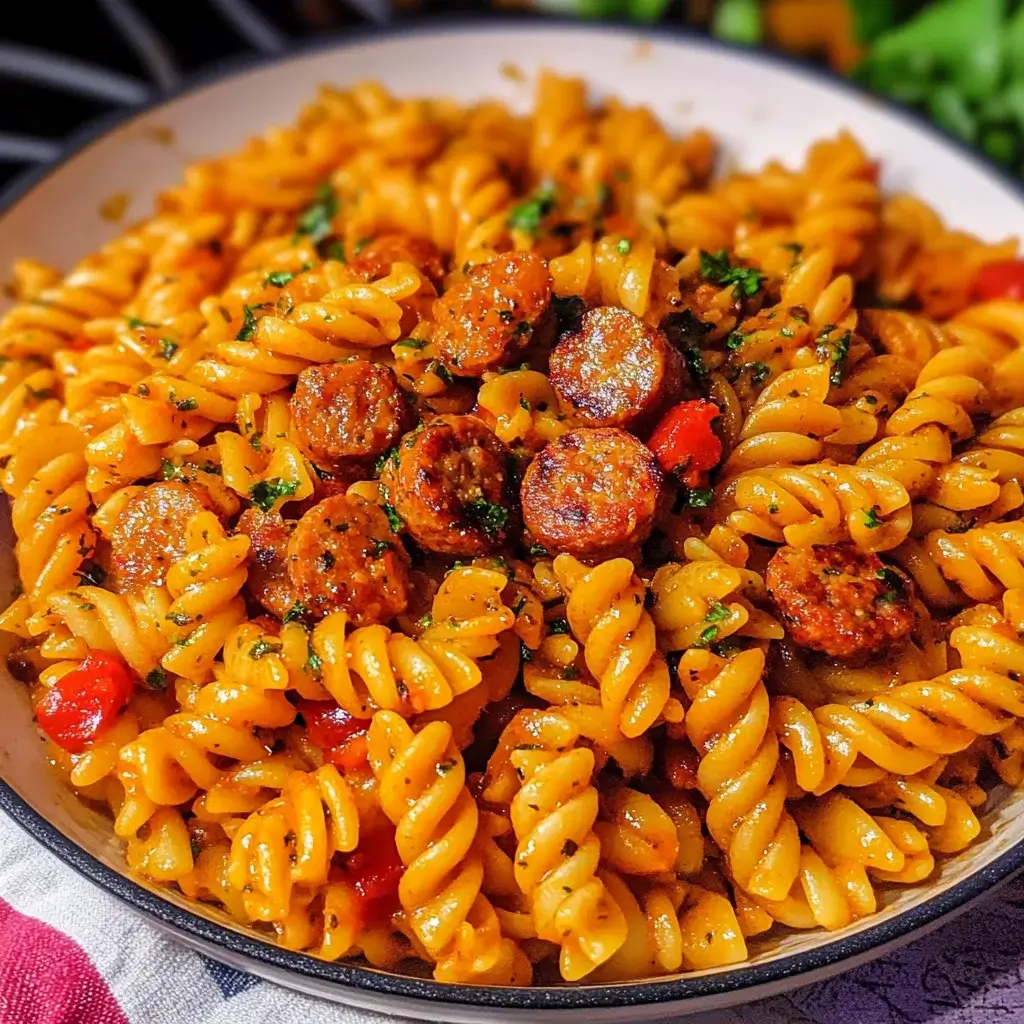
Let me paint you a picture: it’s a busy weeknight, the kids are clamoring for dinner, and frankly, so am I. Takeout is tempting, but I crave something homemade, comforting, and packed with flavor. Enter my absolute savior: Sausage & Red Pepper Pasta. This isn’t just another pasta dish; it’s a vibrant, satisfying meal that’s ready in under 30 minutes and guaranteed to vanish from the table. Seriously, it’s pasta night magic. From the moment the savory aroma of Italian sausage and sweet peppers starts to fill the kitchen, everyone starts gravitating towards the stove. The slightly spicy sausage, the sweet roasted red peppers, the garlicky sauce coating perfectly cooked pasta – it’s a symphony of flavors and textures that just works. Even my notoriously picky eater, who usually approaches vegetables with suspicion, happily devours the red peppers in this dish. And the best part? It’s incredibly versatile. You can adjust the spice level, swap out the sausage, add extra veggies – it’s a recipe that welcomes customization. If you’re looking for a weeknight dinner champion that’s both easy to make and utterly delicious, look no further. Sausage & Red Pepper Pasta is about to become your new family favorite – it certainly is in my house!
Ingredients: The Flavor Building Blocks of Your Sausage & Red Pepper Pasta
To create this flavorful and satisfying pasta dish, you’ll need a handful of fresh, high-quality ingredients. Each element plays a crucial role in building the final taste and texture. Here’s a detailed ingredient list to guide you in crafting the perfect Sausage & Red Pepper Pasta:
- Pasta: 1 pound (450g) of your preferred pasta shape. Short pasta shapes like penne, rigatoni, fusilli, cavatappi, or orecchiette are excellent choices. Their ridges and shapes are ideal for capturing the delicious sauce and chunky sausage and pepper mixture. However, long pasta like spaghetti, linguine, or fettuccine can also be used, though the sauce might coat them differently. For a healthier option, consider using whole wheat pasta for added fiber and a slightly nutty flavor.
- Italian Sausage: 1 pound (450g) of Italian sausage. You have options here! Sweet Italian sausage will provide a milder, savory flavor, allowing the sweetness of the peppers to shine. Hot Italian sausage will add a delightful kick of spice, creating a more robust and flavorful dish. You can also use a combination of sweet and hot for a balanced heat level. Bulk sausage (removed from casings) is the most convenient for this recipe as you will be crumbling it. If using sausage links, simply remove the casings before cooking. For a leaner option, consider using chicken or turkey Italian sausage.
- Red Bell Peppers: 2 large red bell peppers. Red bell peppers are essential for their sweetness and vibrant color. They roast beautifully and provide a wonderful textural contrast to the sausage and pasta. Look for firm, heavy peppers with smooth, unblemished skin. You can also use orange or yellow bell peppers for a slightly different flavor profile and color variation, or a mix of colors for visual appeal.
- Onion: 1 medium yellow onion. Onion provides an aromatic base for the sauce and adds depth of flavor. Yellow onions are a good all-purpose choice, offering a mild sweetness when cooked. You can also use white or sweet onions.
- Garlic: 4 cloves garlic. Fresh garlic is crucial for its pungent aroma and flavor. Mince it finely to ensure it cooks evenly and infuses the sauce with its garlicky goodness. Don’t be tempted to use pre-minced garlic, as the flavor is often less intense.
- Olive Oil: ¼ cup extra virgin olive oil. Olive oil is used for sautéing the vegetables and sausage, adding healthy fats and enhancing the flavors. Extra virgin olive oil is preferred for its superior flavor, but regular olive oil will also work.
- Canned Diced Tomatoes: 1 (14.5 ounce) can of diced tomatoes, undrained. Diced tomatoes form the base of the sauce, adding acidity, body, and tomato flavor. Use undrained diced tomatoes, as the juice adds moisture to the sauce. You can use plain diced tomatoes or fire-roasted diced tomatoes for a smokier flavor.
- Tomato Paste: 2 tablespoons tomato paste. Tomato paste adds concentrated tomato flavor and richness to the sauce, helping to deepen its color and complexity.
- Dry Red Wine (Optional): ½ cup dry red wine. Red wine adds depth and complexity to the sauce. Choose a dry red wine like Chianti, Cabernet Sauvignon, or Merlot. If you prefer not to use wine, you can substitute with chicken broth or extra tomato sauce.
- Dried Oregano: 1 teaspoon dried oregano. Dried oregano adds a warm, slightly peppery, and aromatic note that complements the Italian flavors of the sausage and peppers.
- Dried Basil: 1 teaspoon dried basil. Dried basil adds a sweet and slightly peppery, aromatic flavor that is classic in Italian cuisine.
- Red Pepper Flakes (Optional): ¼ teaspoon red pepper flakes, or to taste. Red pepper flakes add a touch of heat, especially if you are using sweet Italian sausage and want to add a little kick. Adjust the amount to your preference, or omit it entirely if you prefer a milder dish.
- Fresh Parsley: ¼ cup chopped fresh parsley. Fresh parsley is used for garnish, adding a fresh, herbaceous note and a pop of color to the finished dish. Flat-leaf parsley (Italian parsley) is preferred for its stronger flavor.
- Parmesan Cheese: ½ cup grated Parmesan cheese, plus extra for serving. Parmesan cheese adds a salty, nutty, and umami-rich layer of flavor to the pasta. Use freshly grated Parmesan for the best melting and flavor. Pre-grated Parmesan often contains cellulose and doesn’t melt as smoothly.
- Salt and Black Pepper: To taste. Seasoning is crucial to bring out all the flavors in this dish. Taste as you go and adjust the salt and pepper to your liking.
Ingredient Variations and Substitutions:
- Sausage Variations: Try using chorizo, andouille sausage, or even plant-based sausage for different flavor profiles.
- Vegetable Additions: Add other vegetables like mushrooms, zucchini, or eggplant along with the peppers.
- Spice Level Adjustment: Increase or decrease the red pepper flakes to control the spice level. You can also add a pinch of cayenne pepper for extra heat.
- Creamy Version: For a creamier sauce, stir in ¼ – ½ cup heavy cream or half-and-half at the end of cooking.
- Cheese Variations: Use Pecorino Romano cheese instead of or in addition to Parmesan for a sharper, saltier flavor. A sprinkle of fresh mozzarella at the end would also be delicious.
- Herb Swaps: Use Italian seasoning blend instead of oregano and basil, or add other fresh herbs like thyme or rosemary.
By using these high-quality ingredients and understanding the potential variations, you’re well on your way to creating a truly delicious and personalized Sausage & Red Pepper Pasta!
Instructions: Your Step-by-Step Guide to Sausage & Red Pepper Pasta Deliciousness
Ready to transform these ingredients into a mouthwatering pasta dish? Follow these simple, step-by-step instructions to create Sausage & Red Pepper Pasta that will be a weeknight dinner winner. This recipe is designed to be quick, easy, and incredibly flavorful!
Step 1: Prepare the Vegetables and Sausage – Building the Flavor Base
- Prepare Vegetables: Wash and core the red bell peppers. Slice them into strips about ½ inch wide. Peel and thinly slice the yellow onion. Mince the garlic cloves.
- Cook Sausage: Heat 1 tablespoon of olive oil in a large, deep skillet or Dutch oven over medium-high heat. Add the Italian sausage (removed from casings and crumbled). Cook, breaking it up with a spoon, until browned and cooked through. This should take about 5-7 minutes. Remove the cooked sausage from the skillet and set aside, leaving any rendered sausage fat in the skillet. The browned bits in the skillet add extra flavor to the sauce.
Step 2: Sauté Vegetables and Build the Sauce – Layering Flavors
- Sauté Onion and Peppers: Add the sliced onion and red pepper strips to the skillet with the sausage fat (add another tablespoon of olive oil if needed). Sauté over medium heat, stirring occasionally, until the vegetables are softened and slightly caramelized, about 8-10 minutes. Caramelizing the onions and peppers brings out their natural sweetness and adds depth of flavor.
- Add Garlic and Spices: Add the minced garlic, dried oregano, dried basil, and red pepper flakes (if using) to the skillet with the vegetables. Sauté for another minute, until the garlic is fragrant. This “blooming” of the spices in the hot oil enhances their aroma and flavor.
- Stir in Tomato Paste: Add the tomato paste to the skillet and cook for 1-2 minutes, stirring constantly, until it slightly darkens in color. Cooking the tomato paste deepens its flavor and removes any raw taste.
- Deglaze with Red Wine (Optional): If using red wine, pour it into the skillet. Scrape up any browned bits from the bottom of the pan with a wooden spoon or spatula (this is called deglazing) – these bits are packed with flavor! Let the wine simmer for a few minutes, until it has reduced slightly. This step adds depth and complexity to the sauce. If not using wine, skip this step and move directly to adding tomatoes.
- Add Diced Tomatoes: Pour the can of undrained diced tomatoes into the skillet. Stir to combine everything. Bring the sauce to a simmer.
Step 3: Simmer Sauce and Cook Pasta – Bringing it All Together
- Simmer Sauce: Reduce the heat to low, cover the skillet, and let the sauce simmer for at least 15 minutes, or up to 30 minutes, stirring occasionally. Simmering allows the flavors to meld together and the sauce to thicken slightly. The longer it simmers, the richer the flavor will become.
- Cook Pasta: While the sauce is simmering, cook the pasta according to package directions in a large pot of salted boiling water until al dente. “Al dente” means “to the tooth” in Italian – the pasta should be cooked through but still have a slight bite. Reserve about 1 cup of pasta water before draining the pasta.
Step 4: Combine Pasta, Sauce, and Sausage – The Final Touches
- Add Sausage to Sauce: Stir the cooked sausage back into the simmering sauce. Heat through.
- Add Pasta to Sauce: Add the drained pasta to the skillet with the sauce. Toss everything together to coat the pasta evenly with the sauce.
- Adjust Sauce Consistency (if needed): If the sauce seems too thick, add a little of the reserved pasta water, one tablespoon at a time, until you reach your desired consistency. Pasta water is starchy and helps to create a silky, emulsified sauce.
- Stir in Parmesan Cheese: Stir in the grated Parmesan cheese. Toss to combine and melt the cheese into the sauce.
- Season to Taste: Taste the pasta and sauce. Season with salt and black pepper to taste. Adjust red pepper flakes if you want more heat.
Step 5: Serve and Garnish – Enjoy Your Delicious Pasta!
- Serve Immediately: Serve the Sausage & Red Pepper Pasta hot, garnished with fresh chopped parsley and extra grated Parmesan cheese, if desired.
Following these detailed instructions will ensure you create a perfectly cooked, flavorful, and satisfying Sausage & Red Pepper Pasta dish every time. Enjoy the process and the delicious results!
Nutrition Facts: Fueling Your Body with Flavorful Pasta
Understanding the nutritional content of your meals can be helpful for making informed dietary choices. Here’s a general estimate of the nutrition facts for a serving of Sausage & Red Pepper Pasta. Please note that these are estimations and can vary based on specific ingredient brands, portion sizes, and variations in the recipe.
Serving Size: Approximately 1.5 cups (about 375 grams)
Servings Per Recipe: This recipe typically serves 6-8 people, depending on portion sizes. For nutritional estimates, we’ll consider 6 servings for ease of calculation.
Approximate Nutritional Values Per Serving (based on 6 servings, using sweet Italian sausage and penne pasta):
- Calories: Approximately 500-600 calories
- Protein: 25-30 grams
- Fat: 25-35 grams
- Saturated Fat: 8-12 grams (primarily from sausage and Parmesan cheese)
- Unsaturated Fat: 15-25 grams (primarily from olive oil and sausage)
- Cholesterol: 80-100 mg
- Sodium: 600-800 mg (can vary depending on sausage type and added salt)
- Carbohydrates: 50-60 grams
- Fiber: 4-6 grams (primarily from pasta and vegetables)
- Sugar: 5-8 grams (naturally occurring in tomatoes and peppers)
Important Nutritional Considerations:
- Calorie Range: The calorie range is broad because it depends on the type of sausage used (leaner sausage will have fewer calories), the amount of olive oil, and portion sizes.
- Fat Content: This dish is moderately high in fat, primarily due to the Italian sausage and olive oil. While some of this is healthy unsaturated fat, it’s important to be mindful of portion sizes, especially if you are watching your fat intake. Using leaner sausage and reducing olive oil can lower the fat content.
- Sodium Content: The sodium content is moderate and comes from the sausage, Parmesan cheese, and added salt. Using low-sodium sausage and controlling added salt can reduce sodium content.
- Protein Content: The protein content is good, mainly from the Italian sausage and Parmesan cheese.
- Fiber Content: The fiber content is decent, primarily from the pasta and red bell peppers. Using whole wheat pasta will significantly increase the fiber content.
- Vitamin C: Red bell peppers are an excellent source of Vitamin C, which is an antioxidant and important for immune function.
Tips for Making it Healthier (without sacrificing flavor too much):
- Use Leaner Sausage: Opt for chicken or turkey Italian sausage, or lean pork Italian sausage, to reduce fat and calories. You can also drain off excess fat after browning the sausage.
- Use Whole Wheat Pasta: Swap white pasta for whole wheat pasta to increase fiber content and add nutritional value.
- Increase Vegetables: Add more red bell peppers or other vegetables like mushrooms, zucchini, or spinach to boost the nutrient content and fiber without significantly increasing calories.
- Reduce Olive Oil: You can reduce the amount of olive oil slightly without significantly impacting the flavor. Start with less and add more if needed for sautéing.
- Use Part-Skim Parmesan: While full-fat Parmesan has the best flavor, you can use part-skim Parmesan to slightly reduce fat and calories.
- Control Portion Sizes: Be mindful of your portion sizes. Enjoy this delicious pasta in moderation as part of a balanced diet.
Remember, these are just estimates. For precise nutritional information, you can use online recipe analyzers or nutrition tracking apps and input the specific brands and quantities of ingredients you use. Enjoy this flavorful and satisfying dish as part of a healthy and balanced eating plan.
Preparation Time: Quick and Easy Weeknight Dinner
One of the best features of Sausage & Red Pepper Pasta is its speed and ease of preparation. It’s perfect for busy weeknights when you want a delicious, home-cooked meal without spending hours in the kitchen. Here’s a breakdown of the preparation and cooking times:
Prep Time: Approximately 15-20 minutes
- This includes:
- Slicing bell peppers and onions
- Mincing garlic
- Removing sausage from casings (if using links)
- Grating Parmesan cheese (if using a block)
- Measuring out ingredients
- Getting water boiling for pasta
Cook Time: Approximately 30-35 minutes
- This includes:
- Cooking pasta (around 10-12 minutes)
- Cooking sausage (5-7 minutes)
- Sautéing vegetables and making sauce (15-20 minutes simmering time)
- Combining pasta and sauce (a few minutes)
Total Time: Approximately 45-55 minutes
Breakdown of Time-Saving Tips:
- Work While Water Boils: Start prepping your vegetables while you are waiting for the water to boil for the pasta. This is efficient use of time.
- Simultaneous Cooking: While the pasta is cooking, you can simultaneously prepare the sauce in the skillet. This streamlines the process and saves time.
- Pre-chopped Vegetables (Optional): If you are really short on time, you can buy pre-chopped bell peppers and onions in the produce section of some grocery stores to save a few minutes of prep.
- Use Pre-Grated Parmesan (Optional): Using pre-grated Parmesan cheese instead of grating it yourself will save a minute or two, although freshly grated Parmesan is generally preferred for flavor and melting.
Perfect for Weeknights:
The relatively short prep and cook time makes Sausage & Red Pepper Pasta an ideal choice for weeknight dinners. You can have a flavorful, satisfying, and wholesome meal on the table in under an hour, even on busy evenings. The minimal cleanup (one skillet and a pasta pot) is also a bonus for weeknight cooking! Say goodbye to weeknight dinner stress and hello to delicious and easy Sausage & Red Pepper Pasta!
How to Serve Sausage & Red Pepper Pasta: Complete Your Italian Feast
Sausage & Red Pepper Pasta is a hearty and flavorful dish on its own, but the right accompaniments can elevate your meal into a complete and satisfying Italian-inspired feast. Here are some serving suggestions to help you create a balanced and delicious dining experience:
Side Dishes to Complement Your Pasta:
- Garlic Bread or Crusty Bread: Classic Italian pairings! Serve warm garlic bread, breadsticks, or crusty Italian bread alongside the pasta for soaking up the delicious sauce. Drizzling the bread with olive oil and sprinkling with herbs adds extra flavor.
- Simple Green Salad: A fresh and crisp green salad provides a lovely contrast to the richness of the pasta. Dress it with a light vinaigrette or Italian dressing to balance the flavors. Consider a salad with mixed greens, cherry tomatoes, cucumbers, and a balsamic vinaigrette.
- Caesar Salad: A classic Caesar salad is another great salad option that complements Italian flavors. The creamy dressing and crunchy croutons offer textural contrast.
- Roasted Vegetables: Roasted vegetables like asparagus, broccoli, Brussels sprouts, or zucchini add nutrients and a healthy element to the meal. Roast them simply with olive oil, salt, and pepper to let their natural flavors shine.
- Caprese Salad: The fresh flavors of tomatoes, mozzarella, and basil in a Caprese salad are a light and refreshing counterpoint to the richer pasta dish. Drizzle with balsamic glaze for an extra touch.
- Italian-Style Salad: An Italian-style salad with romaine lettuce, olives, pepperoncini, tomatoes, red onion, and Italian dressing is a flavorful and authentic side dish.
Garnish Ideas for Extra Flavor and Visual Appeal:
- Freshly Grated Parmesan Cheese: Always a welcome addition! Offer extra grated Parmesan cheese at the table for guests to sprinkle over their pasta.
- Fresh Parsley: Chopped fresh parsley is already included in the recipe, but a little extra sprinkled on top just before serving enhances freshness and visual appeal.
- Fresh Basil: Torn fresh basil leaves add a bright, aromatic, and summery touch.
- Red Pepper Flakes: For those who like extra heat, offer a sprinkle of red pepper flakes as a garnish.
- Drizzle of Olive Oil: A drizzle of high-quality extra virgin olive oil over the finished pasta enhances the flavor and adds a touch of elegance.
- Toasted Pine Nuts: For added texture and a slightly nutty flavor, sprinkle toasted pine nuts over the pasta.
Serving Occasions & Meal Ideas:
- Weeknight Family Dinner: This pasta is perfect for a quick, easy, and satisfying weeknight meal. Pair it with a simple green salad and garlic bread for a complete family-friendly dinner.
- Casual Gathering with Friends: Sausage & Red Pepper Pasta is hearty and flavorful, making it great for casual get-togethers, potlucks, or informal dinners with friends.
- Potluck Dish: This pasta travels well and reheats nicely, making it a good choice for potlucks.
- Comfort Food Cravings: When you’re craving Italian comfort food, this pasta hits the spot. It’s a warm, satisfying, and flavorful dish to enjoy on a cozy evening.
Presentation Tips:
- Serve in Bowls: Serve the pasta in individual bowls, garnished attractively with fresh parsley and extra Parmesan cheese.
- Family-Style Platter: For a more casual, family-style meal, serve the pasta on a large platter and let everyone help themselves.
- Garnish Before Serving: Always garnish the pasta just before serving to ensure the herbs are fresh and vibrant.
By considering these serving suggestions and presentation tips, you can create a truly enjoyable and complete meal centered around your delicious Sausage & Red Pepper Pasta. Buon appetito!
Additional Tips for Sausage & Red Pepper Pasta Success: Expert Advice for a Perfect Dish
While Sausage & Red Pepper Pasta is a relatively simple recipe, a few extra tips and tricks can help you elevate your dish from good to outstanding. Here are five additional tips to ensure your pasta is a resounding success:
Tip 1: Don’t Overcook the Pasta – Al Dente is Crucial
- Why it Matters: Overcooked pasta becomes mushy and loses its texture, which is especially noticeable when tossed with a chunky sauce. Al dente pasta, on the other hand, holds its shape, has a pleasant bite, and absorbs the sauce beautifully without becoming soggy.
- How to Achieve Al Dente: Always follow the pasta package directions for cooking time, but start testing for doneness a minute or two before the recommended time. To test, remove a piece of pasta and bite into it. It should be cooked through but still firm to the bite, with a slight resistance in the center. Drain the pasta immediately once it’s al dente to prevent further cooking.
Tip 2: Reserve Pasta Water – Liquid Gold for Sauce Perfection
- Why it Matters: Pasta water is starchy and flavorful, and it acts as a natural emulsifier and sauce thickener. Adding a splash of pasta water to your sausage and pepper sauce helps to create a silkier, smoother, and more cohesive sauce that beautifully coats the pasta.
- How to Use Pasta Water: Before draining your pasta, reserve about 1 cup of the cooking water. If your sauce seems too thick after adding the pasta, gradually add a little pasta water at a time, stirring well, until you reach your desired consistency. You may not need to use all of it.
Tip 3: Brown the Sausage Properly – Building Deep Flavor
- Why it Matters: Browning the sausage properly is essential for developing deep, savory flavors in the dish. Browning creates Maillard reaction, which produces hundreds of flavor compounds that enhance the overall taste. Pale, undercooked sausage will lack depth and flavor.
- How to Brown Sausage: Cook the sausage in a hot skillet over medium-high heat. Don’t overcrowd the pan, as this will steam the sausage instead of browning it. Work in batches if necessary. Break up the sausage with a spoon as it cooks and let it brown well on all sides. Don’t be afraid of some browned bits sticking to the bottom of the pan – these will be deglazed with the wine or tomatoes, adding even more flavor to the sauce.
Tip 4: Simmer the Sauce Long Enough – Melding Flavors and Thickening
- Why it Matters: Simmering the sauce allows the flavors of the sausage, peppers, onions, garlic, tomatoes, and spices to meld together and deepen. It also helps the sauce to thicken slightly as some of the liquid evaporates. A short simmer will result in a sauce that is less flavorful and thinner.
- How Long to Simmer: Simmer the sauce, covered, for at least 15 minutes, or up to 30 minutes for even richer flavor. Stir occasionally to prevent sticking. The sauce should thicken slightly and the flavors should become more complex and harmonious as it simmers.
Tip 5: Taste and Season as You Go – Achieve Flavor Balance
- Why it Matters: Seasoning is crucial for bringing out the best flavors in any dish. Taste your sauce at various stages – after sautéing the vegetables, after adding the tomatoes, and before combining with the pasta. This allows you to adjust the seasoning (salt, pepper, red pepper flakes) as needed to create a perfectly balanced flavor profile.
- How to Taste and Season: Use a clean spoon each time you taste. Start with a smaller amount of salt and pepper, as you can always add more. Consider the overall flavor balance – is it savory enough? Does it need more salt? A touch of heat? Adjust seasonings gradually and taste again until you are happy with the flavor.
By incorporating these five additional tips into your cooking process, you’ll be well-equipped to create an even more delicious and impressive Sausage & Red Pepper Pasta. Happy cooking!
FAQ: Your Burning Questions About Sausage & Red Pepper Pasta Answered
Got questions about making Sausage & Red Pepper Pasta? You’re not alone! Here are answers to five frequently asked questions to help you confidently tackle this delicious recipe:
Q1: Can I use different types of sausage?
A: Absolutely! While Italian sausage is classic and delicious, you can experiment with other types of sausage to change the flavor profile. Chorizo would add a smoky and spicy Spanish flair. Andouille sausage would bring a Cajun kick. Even chicken or turkey Italian sausage is a great leaner option. Consider the spice level and flavor profile of the sausage you choose and adjust other seasonings accordingly.
Q2: I don’t have red wine. Can I substitute something else in the sauce?
A: Yes, if you don’t have red wine or prefer not to use it, you can easily substitute it. Chicken broth or vegetable broth are excellent non-alcoholic substitutes that will still add moisture and depth to the sauce. You can also use extra tomato sauce or even a splash of balsamic vinegar for a slightly different flavor dimension.
Q3: Can I make this pasta dish vegetarian?
A: Yes, you can adapt this recipe to be vegetarian. Simply omit the sausage and consider adding vegetarian Italian sausage crumbles or hearty vegetables like mushrooms, eggplant, or zucchini to maintain a substantial texture. You can also add a can of drained and rinsed cannellini beans or chickpeas for protein. Ensure you use vegetable broth instead of chicken broth if making it vegetarian.
Q4: Can I make Sausage & Red Pepper Pasta ahead of time?
A: Yes, you can prepare the sausage and pepper sauce ahead of time. The sauce can be made up to 2-3 days in advance and stored in an airtight container in the refrigerator. When ready to serve, simply reheat the sauce on the stovetop, cook the pasta, and combine them as directed in the recipe. Cooking the pasta fresh is recommended for best texture. While you can reheat the entire dish (pasta and sauce combined), the pasta may become slightly softer upon reheating.
Q5: Can I freeze Sausage & Red Pepper Pasta?
A: Yes, you can freeze Sausage & Red Pepper Pasta, although the texture of the pasta may change slightly upon thawing. For best results, freeze the sauce separately from the pasta. Cook the sauce completely, let it cool to room temperature, and then transfer it to freezer-safe containers or bags. Cook the pasta fresh when you are ready to serve. If you freeze the pasta and sauce together, cook the pasta slightly less than al dente to prevent it from becoming mushy after freezing and thawing. Thaw the frozen pasta and sauce in the refrigerator overnight and reheat gently on the stovetop or in the microwave.
Hopefully, these FAQs have addressed any questions you might have had about making Sausage & Red Pepper Pasta. Don’t be afraid to experiment and adjust the recipe to your own preferences and dietary needs. Happy cooking and enjoy your delicious pasta!
Print
Sausage & Red Pepper Pasta recipe
Ingredients
- Pasta: 1 pound (450g) of your preferred pasta shape. Short pasta shapes like penne, rigatoni, fusilli, cavatappi, or orecchiette are excellent choices. Their ridges and shapes are ideal for capturing the delicious sauce and chunky sausage and pepper mixture. However, long pasta like spaghetti, linguine, or fettuccine can also be used, though the sauce might coat them differently. For a healthier option, consider using whole wheat pasta for added fiber and a slightly nutty flavor.
- Italian Sausage: 1 pound (450g) of Italian sausage. You have options here! Sweet Italian sausage will provide a milder, savory flavor, allowing the sweetness of the peppers to shine. Hot Italian sausage will add a delightful kick of spice, creating a more robust and flavorful dish. You can also use a combination of sweet and hot for a balanced heat level. Bulk sausage (removed from casings) is the most convenient for this recipe as you will be crumbling it. If using sausage links, simply remove the casings before cooking. For a leaner option, consider using chicken or turkey Italian sausage.
- Red Bell Peppers: 2 large red bell peppers. Red bell peppers are essential for their sweetness and vibrant color. They roast beautifully and provide a wonderful textural contrast to the sausage and pasta. Look for firm, heavy peppers with smooth, unblemished skin. You can also use orange or yellow bell peppers for a slightly different flavor profile and color variation, or a mix of colors for visual appeal.
- Onion: 1 medium yellow onion. Onion provides an aromatic base for the sauce and adds depth of flavor. Yellow onions are a good all-purpose choice, offering a mild sweetness when cooked. You can also use white or sweet onions.
- Garlic: 4 cloves garlic. Fresh garlic is crucial for its pungent aroma and flavor. Mince it finely to ensure it cooks evenly and infuses the sauce with its garlicky goodness. Don’t be tempted to use pre-minced garlic, as the flavor is often less intense.
- Olive Oil: ¼ cup extra virgin olive oil. Olive oil is used for sautéing the vegetables and sausage, adding healthy fats and enhancing the flavors. Extra virgin olive oil is preferred for its superior flavor, but regular olive oil will also work.
- Canned Diced Tomatoes: 1 (14.5 ounce) can of diced tomatoes, undrained. Diced tomatoes form the base of the sauce, adding acidity, body, and tomato flavor. Use undrained diced tomatoes, as the juice adds moisture to the sauce. You can use plain diced tomatoes or fire-roasted diced tomatoes for a smokier flavor.
- Tomato Paste: 2 tablespoons tomato paste. Tomato paste adds concentrated tomato flavor and richness to the sauce, helping to deepen its color and complexity.
- Dry Red Wine (Optional): ½ cup dry red wine. Red wine adds depth and complexity to the sauce. Choose a dry red wine like Chianti, Cabernet Sauvignon, or Merlot. If you prefer not to use wine, you can substitute with chicken broth or extra tomato sauce.
- Dried Oregano: 1 teaspoon dried oregano. Dried oregano adds a warm, slightly peppery, and aromatic note that complements the Italian flavors of the sausage and peppers.
- Dried Basil: 1 teaspoon dried basil. Dried basil adds a sweet and slightly peppery, aromatic flavor that is classic in Italian cuisine.
- Red Pepper Flakes (Optional): ¼ teaspoon red pepper flakes, or to taste. Red pepper flakes add a touch of heat, especially if you are using sweet Italian sausage and want to add a little kick. Adjust the amount to your preference, or omit it entirely if you prefer a milder dish.
- Fresh Parsley: ¼ cup chopped fresh parsley. Fresh parsley is used for garnish, adding a fresh, herbaceous note and a pop of color to the finished dish. Flat-leaf parsley (Italian parsley) is preferred for its stronger flavor.
- Parmesan Cheese: ½ cup grated Parmesan cheese, plus extra for serving. Parmesan cheese adds a salty, nutty, and umami-rich layer of flavor to the pasta. Use freshly grated Parmesan for the best melting and flavor. Pre-grated Parmesan often contains cellulose and doesn’t melt as smoothly.
- Salt and Black Pepper: To taste. Seasoning is crucial to bring out all the flavors in this dish. Taste as you go and adjust the salt and pepper to your liking.
Instructions
Step 1: Prepare the Vegetables and Sausage – Building the Flavor Base
- Prepare Vegetables: Wash and core the red bell peppers. Slice them into strips about ½ inch wide. Peel and thinly slice the yellow onion. Mince the garlic cloves.
- Cook Sausage: Heat 1 tablespoon of olive oil in a large, deep skillet or Dutch oven over medium-high heat. Add the Italian sausage (removed from casings and crumbled). Cook, breaking it up with a spoon, until browned and cooked through. This should take about 5-7 minutes. Remove the cooked sausage from the skillet and set aside, leaving any rendered sausage fat in the skillet. The browned bits in the skillet add extra flavor to the sauce.
Step 2: Sauté Vegetables and Build the Sauce – Layering Flavors
- Sauté Onion and Peppers: Add the sliced onion and red pepper strips to the skillet with the sausage fat (add another tablespoon of olive oil if needed). Sauté over medium heat, stirring occasionally, until the vegetables are softened and slightly caramelized, about 8-10 minutes. Caramelizing the onions and peppers brings out their natural sweetness and adds depth of flavor.
- Add Garlic and Spices: Add the minced garlic, dried oregano, dried basil, and red pepper flakes (if using) to the skillet with the vegetables. Sauté for another minute, until the garlic is fragrant. This “blooming” of the spices in the hot oil enhances their aroma and flavor.
- Stir in Tomato Paste: Add the tomato paste to the skillet and cook for 1-2 minutes, stirring constantly, until it slightly darkens in color. Cooking the tomato paste deepens its flavor and removes any raw taste.
- Deglaze with Red Wine (Optional): If using red wine, pour it into the skillet. Scrape up any browned bits from the bottom of the pan with a wooden spoon or spatula (this is called deglazing) – these bits are packed with flavor! Let the wine simmer for a few minutes, until it has reduced slightly. This step adds depth and complexity to the sauce. If not using wine, skip this step and move directly to adding tomatoes.
- Add Diced Tomatoes: Pour the can of undrained diced tomatoes into the skillet. Stir to combine everything. Bring the sauce to a simmer.
Step 3: Simmer Sauce and Cook Pasta – Bringing it All Together
- Simmer Sauce: Reduce the heat to low, cover the skillet, and let the sauce simmer for at least 15 minutes, or up to 30 minutes, stirring occasionally. Simmering allows the flavors to meld together and the sauce to thicken slightly. The longer it simmers, the richer the flavor will become.
- Cook Pasta: While the sauce is simmering, cook the pasta according to package directions in a large pot of salted boiling water until al dente. “Al dente” means “to the tooth” in Italian – the pasta should be cooked through but still have a slight bite. Reserve about 1 cup of pasta water before draining the pasta.
Step 4: Combine Pasta, Sauce, and Sausage – The Final Touches
- Add Sausage to Sauce: Stir the cooked sausage back into the simmering sauce. Heat through.
- Add Pasta to Sauce: Add the drained pasta to the skillet with the sauce. Toss everything together to coat the pasta evenly with the sauce.
- Adjust Sauce Consistency (if needed): If the sauce seems too thick, add a little of the reserved pasta water, one tablespoon at a time, until you reach your desired consistency. Pasta water is starchy and helps to create a silky, emulsified sauce.
- Stir in Parmesan Cheese: Stir in the grated Parmesan cheese. Toss to combine and melt the cheese into the sauce.
- Season to Taste: Taste the pasta and sauce. Season with salt and black pepper to taste. Adjust red pepper flakes if you want more heat.
Step 5: Serve and Garnish – Enjoy Your Delicious Pasta!
- Serve Immediately: Serve the Sausage & Red Pepper Pasta hot, garnished with fresh chopped parsley and extra grated Parmesan cheese, if desired.
Nutrition
- Serving Size: one normal portion
- Calories: 500-600
- Sugar: 5-8 grams
- Sodium: 600-800 mg
- Fat: 25-35 grams
- Saturated Fat: 8-12 grams
- Unsaturated Fat: 15-25 grams
- Carbohydrates: 50-60 grams
- Fiber: 4-6 grams
- Protein: 25-30 gram
- Cholesterol: 80-100 mg