
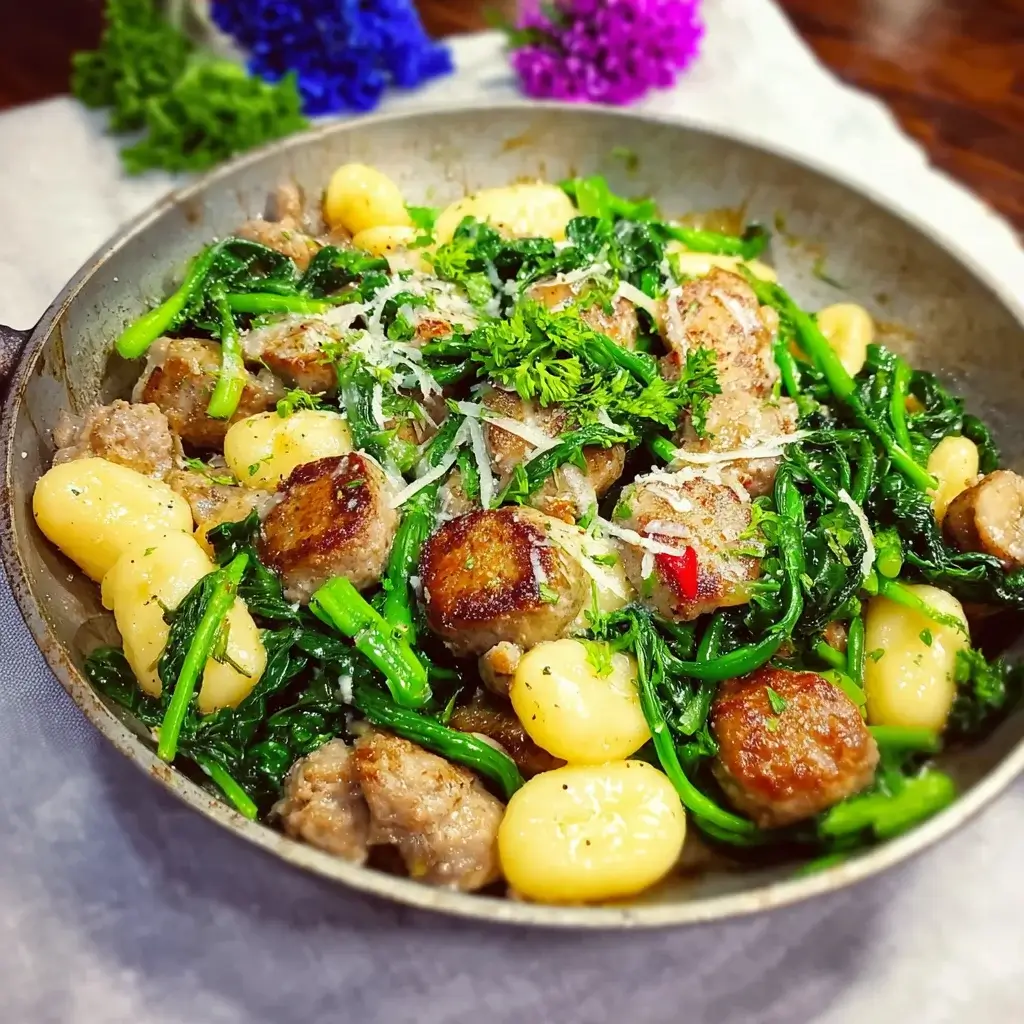
Of all the one-pan wonders that have graced my kitchen, this Skillet Gnocchi with Sausage & Broccoli Rabe holds a special place in my heart and my weekly meal rotation. The first time I made it, I was skeptical. Gnocchi without boiling? It felt like breaking a sacred culinary rule. But the result was a revelation that had my entire family scraping their plates and asking for seconds. The gnocchi, instead of being soft and doughy, become these incredible little pillows with a crispy, golden-brown crust and a tender, chewy interior. It’s a textural masterpiece. Paired with the rich, savory flavor of Italian sausage and the sophisticated, slightly bitter bite of broccoli rabe, the dish is a symphony of Italian-inspired flavors that feels both rustic and incredibly elegant. It’s the kind of meal that solves the “what’s for dinner?” dilemma in under 30 minutes, yet tastes like you spent hours crafting it. It has become our go-to for busy weeknights, a comforting meal for chilly evenings, and even a dish I’m proud to serve to guests. It’s more than just a recipe; it’s a technique that will change the way you think about gnocchi forever.
Complete Recipe: Skillet Gnocchi with Sausage & Broccoli Rabe
This recipe is designed for maximum flavor with minimal cleanup. By cooking everything in a single skillet, the flavors meld together beautifully, creating a rich, savory pan sauce that coats every single ingredient.
The Cast of Characters: Our Ingredients
Understanding your ingredients is the first step to mastering a dish. Here, each component plays a vital role in creating a balanced and delicious final product.
- Shelf-Stable Potato Gnocchi (1 lb / 500g package): This is the secret weapon. Unlike refrigerated or frozen gnocchi, the shelf-stable variety is slightly denser and lower in moisture, which allows it to pan-sear to a perfect golden crisp without becoming mushy.
- Hot or Sweet Italian Sausage (1 lb / 450g): The heart of the dish. Choose bulk sausage for ease, or remove the casings from links. Hot Italian sausage will add a pleasant, warming spice, while sweet Italian sausage (which contains fennel) provides a more classic, aromatic flavor.
- Broccoli Rabe (1 large bunch, about 1 lb / 450g): Also known as rapini, this is not broccoli! It’s a leafy green in the turnip family, prized for its complex, nutty, and pleasantly bitter flavor that cuts through the richness of the sausage and gnocchi.
- Extra Virgin Olive Oil (2 tablespoons): Used for searing the gnocchi and sautéing the aromatics. A good quality olive oil will add its own peppery, fruity notes to the dish.
- Garlic (4-6 cloves, thinly sliced): Don’t be shy with the garlic! It infuses the entire dish with its pungent, savory aroma. Slicing it thinly ensures it cooks evenly and doesn’t burn.
- Shallot (1 large, finely chopped): A shallot offers a milder, more delicate, and slightly sweeter flavor than a regular onion, which complements the other ingredients without overpowering them.
- Low-Sodium Chicken Broth (1/2 cup): This is for deglazing the pan and creating a light sauce. Using low-sodium broth gives you control over the final saltiness of the dish. You can substitute vegetable broth or even a dry white wine like Pinot Grigio.
- Grated Parmesan Cheese (1/2 cup, plus more for serving): The salty, nutty king of Italian cheeses. It helps to bind the sauce and adds a final layer of umami-rich flavor. Always use freshly grated for the best melting and flavor.
- Red Pepper Flakes (1/4 to 1/2 teaspoon, to taste): For a touch of heat. Adjust the amount based on your preference and whether you used hot or sweet sausage.
- Kosher Salt and Freshly Ground Black Pepper (to taste): Essential for seasoning every layer of the dish.
Step-by-Step Instructions to Culinary Success
Follow these detailed steps to ensure a perfect result every time. The key is to build flavors in layers within the same skillet.
Step 1: Brown the Sausage
Place a large, heavy-bottomed skillet (a 12-inch cast-iron or stainless steel skillet is ideal) over medium-high heat. Add the Italian sausage to the hot, dry pan. Use a wooden spoon or spatula to break the sausage into small, bite-sized crumbles as it cooks. Allow it to cook for 5-7 minutes, stirring occasionally, until it’s nicely browned and cooked through. Don’t rush this step; the browned bits (or “fond”) left in the pan are packed with flavor. Once cooked, use a slotted spoon to transfer the sausage to a separate bowl or plate, leaving the rendered fat in the skillet. There should be about 1-2 tablespoons of fat; if there’s an excessive amount, pour some off.
Step 2: The Magic Sear – Pan-Fry the Gnocchi
This is where the transformation happens. Add the 2 tablespoons of olive oil to the sausage fat in the skillet. Carefully add the uncooked, shelf-stable gnocchi to the pan in a single layer. Do not overcrowd the pan; cook in two batches if necessary to ensure a good sear. Let the gnocchi cook undisturbed for 3-4 minutes, until the undersides are a deep golden brown and crisp. Use a spatula to toss the gnocchi and continue to cook for another 3-4 minutes, tossing occasionally, until they are crispy and golden on all sides. They will be pillowy and tender on the inside. Once crisped, transfer the gnocchi to the bowl with the cooked sausage.
Step 3: Prepare and Cook the Broccoli Rabe
While the gnocchi is searing, prepare your broccoli rabe. Wash it thoroughly and trim off the thick, tough bottom 1-2 inches of the stems. Roughly chop the remaining stems and leaves into 2-inch pieces. After removing the gnocchi, add the chopped broccoli rabe to the hot skillet. It will seem like a lot, but it will cook down significantly. Season with a pinch of salt to help draw out moisture. Sauté for 2-3 minutes, stirring frequently, until it begins to wilt and turn bright green.
Step 4: Build the Flavor Base
Push the broccoli rabe to one side of the skillet. Add the sliced garlic, chopped shallot, and red pepper flakes to the empty side. Sauté for about 1-2 minutes until they become fragrant and the shallots are softened. Be careful not to let the garlic burn, as it will become bitter. Once fragrant, stir the aromatics into the broccoli rabe.
Step 5: Deglaze and Create the Sauce
Pour the 1/2 cup of chicken broth into the skillet. As the liquid bubbles, use your wooden spoon to scrape up all the flavorful browned bits from the bottom of the pan. This process, called deglazing, is crucial for creating a rich, savory pan sauce. Allow the broth to simmer and reduce by about half, which should take 2-3 minutes. This will also help to steam and tenderize the broccoli rabe stems.
Step 6: Bring It All Together
Return the cooked sausage and crispy gnocchi to the skillet with the broccoli rabe. Add the 1/2 cup of grated Parmesan cheese. Stir everything together gently, allowing the cheese to melt and the sauce to coat every component. Let it cook for one more minute for the flavors to meld perfectly. Taste the dish and season with additional salt and freshly ground black pepper as needed.
Nutrition Facts
- Servings: 4 generous servings
- Calories per serving: Approximately 650-750 kcal
Disclaimer: The nutritional information provided is an estimate and can vary based on the specific ingredients used, such as the type of sausage (pork vs. chicken) and the amount of oil.
This dish provides a well-rounded mix of macronutrients. The gnocchi supplies carbohydrates for energy, the sausage delivers substantial protein and fat for satiety, and the broccoli rabe offers essential vitamins, minerals, and fiber.
Preparation and Cooking Time
- Preparation Time: 10 minutes (chopping garlic, shallot, and broccoli rabe)
- Cook Time: 20 minutes
- Total Time: 30 minutes
This is a true 30-minute meal, making it an absolute champion for busy weeknights when you crave something satisfying and homemade without spending hours in the kitchen.
How to Serve This Skillet Masterpiece
While this dish is a stunning, complete meal on its own, a few simple additions can elevate it further.
- As a Standalone Main Course: Serve it hot, straight from the skillet, into warmed bowls.
- Finishing Touches and Garnishes:
- Extra Parmesan: A generous sprinkle of freshly grated Parmesan cheese on top is non-negotiable.
- Fresh Herbs: A scattering of fresh, chopped flat-leaf parsley adds a touch of brightness and color.
- A Squeeze of Lemon: A small wedge of lemon served on the side allows each person to add a hit of acidity, which beautifully cuts through the richness of the sausage.
- A Drizzle of Oil: For an extra luxurious finish, drizzle a small amount of high-quality, peppery extra virgin olive oil over the top just before serving.
- Perfect Pairings:
- Wine: The robust flavors pair wonderfully with a medium-bodied Italian red wine like a Chianti Classico or a Montepulciano d’Abruzzo. For white wine lovers, a crisp and acidic Sauvignon Blanc or Pinot Grigio will complement the dish without being overpowered.
- Bread: Serve with a side of warm, crusty bread or focaccia to sop up every last bit of the delicious pan sauce.
5 Additional Tips for Gnocchi Perfection
These pro tips will help you troubleshoot common issues and customize the dish to your liking.
1. The Gnocchi Secret: Don’t Boil, Don’t Crowd!
The most critical tip is to resist the urge to boil the gnocchi. Pan-searing shelf-stable gnocchi directly from the package is what creates that irresistible crispy-on-the-outside, soft-on-the-inside texture. The second part of this secret is not to overcrowd the pan. The gnocchi needs space and direct contact with the hot surface to sear properly. If you pile them in, they will steam instead of fry, resulting in a gummy texture. Work in batches if your skillet isn’t large enough.
2. How to Tame the Rabe
Broccoli rabe’s signature bitterness is a feature, not a bug, but its intensity can vary. If you are sensitive to bitter flavors or have a particularly strong bunch, you can easily temper it. Simply blanch the chopped broccoli rabe in a pot of salted boiling water for 60 seconds, then immediately transfer it to an ice bath to stop the cooking process. Drain it well before adding it to the skillet as directed in the recipe. This will mellow its bitter edge while preserving its vibrant green color.
3. Masterful Make-Ahead and Storage
This dish is best enjoyed fresh to appreciate the crispy texture of the gnocchi. However, leftovers are still delicious! Store them in an airtight container in the refrigerator for up to 3 days. To reheat, skip the microwave, which will make the gnocchi soft. Instead, warm a skillet over medium heat with a touch of olive oil and sauté the leftovers for a few minutes until warmed through. This will help to re-crisp the gnocchi slightly.
4. The Art of the Swap: Ingredient Variations
This recipe is a fantastic template. Feel free to customize it based on what you have on hand or your personal preferences.
- Protein: Swap the Italian sausage for crumbled chicken sausage, spicy chorizo, or diced pancetta.
- Greens: If you can’t find broccoli rabe, broccolini is a great substitute with a milder flavor. Hearty greens like kale or Swiss chard also work well; just be sure to cook them a bit longer to tenderize. In a pinch, you can even stir in a few large handfuls of fresh spinach at the very end.
- Veggies: Add sliced mushrooms, sun-dried tomatoes, or roasted red peppers for extra flavor and texture.
- Cheese: Pecorino Romano can be used in place of Parmesan for a sharper, saltier flavor. A dollop of ricotta on top when serving adds a wonderful creaminess.
5. Choose Your Skillet Wisely
The type of skillet you use can impact the final result. A 12-inch cast-iron skillet is the ultimate choice for this recipe. It retains heat incredibly well, which is essential for achieving a deep, even sear on both the sausage and the gnocchi. A heavy-bottomed stainless steel skillet is another excellent option. While a non-stick skillet will work, you may not develop the same flavorful “fond” on the bottom of the pan, which is key to the sauce’s depth.
Frequently Asked Questions (FAQ)
1. Can I use frozen or refrigerated gnocchi for this recipe?
While you can, it’s not recommended for this specific pan-searing method. Frozen and refrigerated gnocchi have a much higher moisture content. If you try to pan-sear them directly, they tend to steam and can become gummy. The shelf-stable, vacuum-sealed gnocchi is specifically formulated to be denser, making it ideal for frying. If you only have frozen gnocchi, it’s best to cook it according to package directions (boil it) and then toss it into the skillet at the very end with the other cooked ingredients. You will miss out on the crispy texture, but the flavors will still be delicious.
2. My broccoli rabe was extremely bitter. What went wrong?
You didn’t do anything wrong! The bitterness of broccoli rabe can vary significantly from bunch to bunch and season to season. To guarantee a milder flavor, use the blanching technique mentioned in the tips section: boil it in salted water for 1 minute and then shock it in an ice bath before sautéing. Additionally, make sure you don’t skip the garlic, red pepper flakes, and Parmesan cheese, as these strong, savory flavors are meant to balance and complement the rabe’s bitterness. A final squeeze of lemon juice at the end can also help cut the bitterness.
3. How can I make this dish vegetarian?
This dish is easily adaptable for a vegetarian diet. Simply omit the sausage and start the recipe by searing the gnocchi in olive oil. To replace the savory, umami flavor of the sausage, consider adding meaty mushrooms (like cremini or shiitake) and a teaspoon of smoked paprika or a splash of soy sauce. You could also use a high-quality plant-based sausage. Ensure you use vegetable broth instead of chicken broth to keep it fully vegetarian.
4. Is this recipe gluten-free?
Traditional potato gnocchi is made with wheat flour, so it is not gluten-free. However, the gluten-free product market has exploded in recent years, and excellent gluten-free gnocchi options are now widely available in most supermarkets, often in the same aisle as regular gnocchi or in the health food section. Cauliflower gnocchi is another popular alternative that is typically gluten-free (always check the label). Simply substitute it 1-for-1 and follow the recipe as written for a delicious gluten-free meal.
5. What is the difference between broccoli rabe and broccolini?
This is a very common point of confusion! Despite the names, they are quite different.
- Broccoli Rabe (Rapini): A member of the turnip family. It has thin stalks, abundant leaves, and small, broccoli-like florets. Its flavor is stronger, more complex, and pleasantly bitter.
- Broccolini: A hybrid vegetable, a cross between standard broccoli and Chinese broccoli. It has long, tender stalks and small florets. Its flavor is much milder, sweeter, and more closely resembles a delicate version of regular broccoli.
While you can substitute broccolini in this recipe for a milder dish, the signature bitter note of broccoli rabe is what makes the traditional version so unique and well-balanced.
Skillet Gnocchi with Sausage & Broccoli Rabe Recipe
Ingredients
-
Shelf-Stable Potato Gnocchi (1 lb / 500g package): This is the secret weapon. Unlike refrigerated or frozen gnocchi, the shelf-stable variety is slightly denser and lower in moisture, which allows it to pan-sear to a perfect golden crisp without becoming mushy.
-
Hot or Sweet Italian Sausage (1 lb / 450g): The heart of the dish. Choose bulk sausage for ease, or remove the casings from links. Hot Italian sausage will add a pleasant, warming spice, while sweet Italian sausage (which contains fennel) provides a more classic, aromatic flavor.
-
Broccoli Rabe (1 large bunch, about 1 lb / 450g): Also known as rapini, this is not broccoli! It’s a leafy green in the turnip family, prized for its complex, nutty, and pleasantly bitter flavor that cuts through the richness of the sausage and gnocchi.
-
Extra Virgin Olive Oil (2 tablespoons): Used for searing the gnocchi and sautéing the aromatics. A good quality olive oil will add its own peppery, fruity notes to the dish.
-
Garlic (4-6 cloves, thinly sliced): Don’t be shy with the garlic! It infuses the entire dish with its pungent, savory aroma. Slicing it thinly ensures it cooks evenly and doesn’t burn.
-
Shallot (1 large, finely chopped): A shallot offers a milder, more delicate, and slightly sweeter flavor than a regular onion, which complements the other ingredients without overpowering them.
-
Low-Sodium Chicken Broth (1/2 cup): This is for deglazing the pan and creating a light sauce. Using low-sodium broth gives you control over the final saltiness of the dish. You can substitute vegetable broth or even a dry white wine like Pinot Grigio.
-
Grated Parmesan Cheese (1/2 cup, plus more for serving): The salty, nutty king of Italian cheeses. It helps to bind the sauce and adds a final layer of umami-rich flavor. Always use freshly grated for the best melting and flavor.
-
Red Pepper Flakes (1/4 to 1/2 teaspoon, to taste): For a touch of heat. Adjust the amount based on your preference and whether you used hot or sweet sausage.
-
Kosher Salt and Freshly Ground Black Pepper (to taste): Essential for seasoning every layer of the dish.
Instructions
Place a large, heavy-bottomed skillet (a 12-inch cast-iron or stainless steel skillet is ideal) over medium-high heat. Add the Italian sausage to the hot, dry pan. Use a wooden spoon or spatula to break the sausage into small, bite-sized crumbles as it cooks. Allow it to cook for 5-7 minutes, stirring occasionally, until it’s nicely browned and cooked through. Don’t rush this step; the browned bits (or “fond”) left in the pan are packed with flavor. Once cooked, use a slotted spoon to transfer the sausage to a separate bowl or plate, leaving the rendered fat in the skillet. There should be about 1-2 tablespoons of fat; if there’s an excessive amount, pour some off.
This is where the transformation happens. Add the 2 tablespoons of olive oil to the sausage fat in the skillet. Carefully add the uncooked, shelf-stable gnocchi to the pan in a single layer. Do not overcrowd the pan; cook in two batches if necessary to ensure a good sear. Let the gnocchi cook undisturbed for 3-4 minutes, until the undersides are a deep golden brown and crisp. Use a spatula to toss the gnocchi and continue to cook for another 3-4 minutes, tossing occasionally, until they are crispy and golden on all sides. They will be pillowy and tender on the inside. Once crisped, transfer the gnocchi to the bowl with the cooked sausage.
While the gnocchi is searing, prepare your broccoli rabe. Wash it thoroughly and trim off the thick, tough bottom 1-2 inches of the stems. Roughly chop the remaining stems and leaves into 2-inch pieces. After removing the gnocchi, add the chopped broccoli rabe to the hot skillet. It will seem like a lot, but it will cook down significantly. Season with a pinch of salt to help draw out moisture. Sauté for 2-3 minutes, stirring frequently, until it begins to wilt and turn bright green.
Push the broccoli rabe to one side of the skillet. Add the sliced garlic, chopped shallot, and red pepper flakes to the empty side. Sauté for about 1-2 minutes until they become fragrant and the shallots are softened. Be careful not to let the garlic burn, as it will become bitter. Once fragrant, stir the aromatics into the broccoli rabe.
Pour the 1/2 cup of chicken broth into the skillet. As the liquid bubbles, use your wooden spoon to scrape up all the flavorful browned bits from the bottom of the pan. This process, called deglazing, is crucial for creating a rich, savory pan sauce. Allow the broth to simmer and reduce by about half, which should take 2-3 minutes. This will also help to steam and tenderize the broccoli rabe stems.
Return the cooked sausage and crispy gnocchi to the skillet with the broccoli rabe. Add the 1/2 cup of grated Parmesan cheese. Stir everything together gently, allowing the cheese to melt and the sauce to coat every component. Let it cook for one more minute for the flavors to meld perfectly. Taste the dish and season with additional salt and freshly ground black pepper as needed.
Nutrition
- Serving Size: one normal portion
- Calories: 650-750